Five painted rooms still doing their job
Most paintings in museums are refugees. They were made for a chapel, a dining room or a ceiling, and now they hang at eye level on a white wall, with a label. I put these five together because they never left. Each is still in the room it was painted for, and each room is still being used for something close to what it was built for: eating, meeting, walking through, praying. You don't visit them so much as join them.
There is a second reason. A painting in its own room is not only better lit or better understood; it is also less polite. These pictures were made to be lived with, eaten under, prayed beneath and walked past, and they are louder, more theatrical and more fun than anything that was painted to hang on a museum wall. I like them for their bad manners.
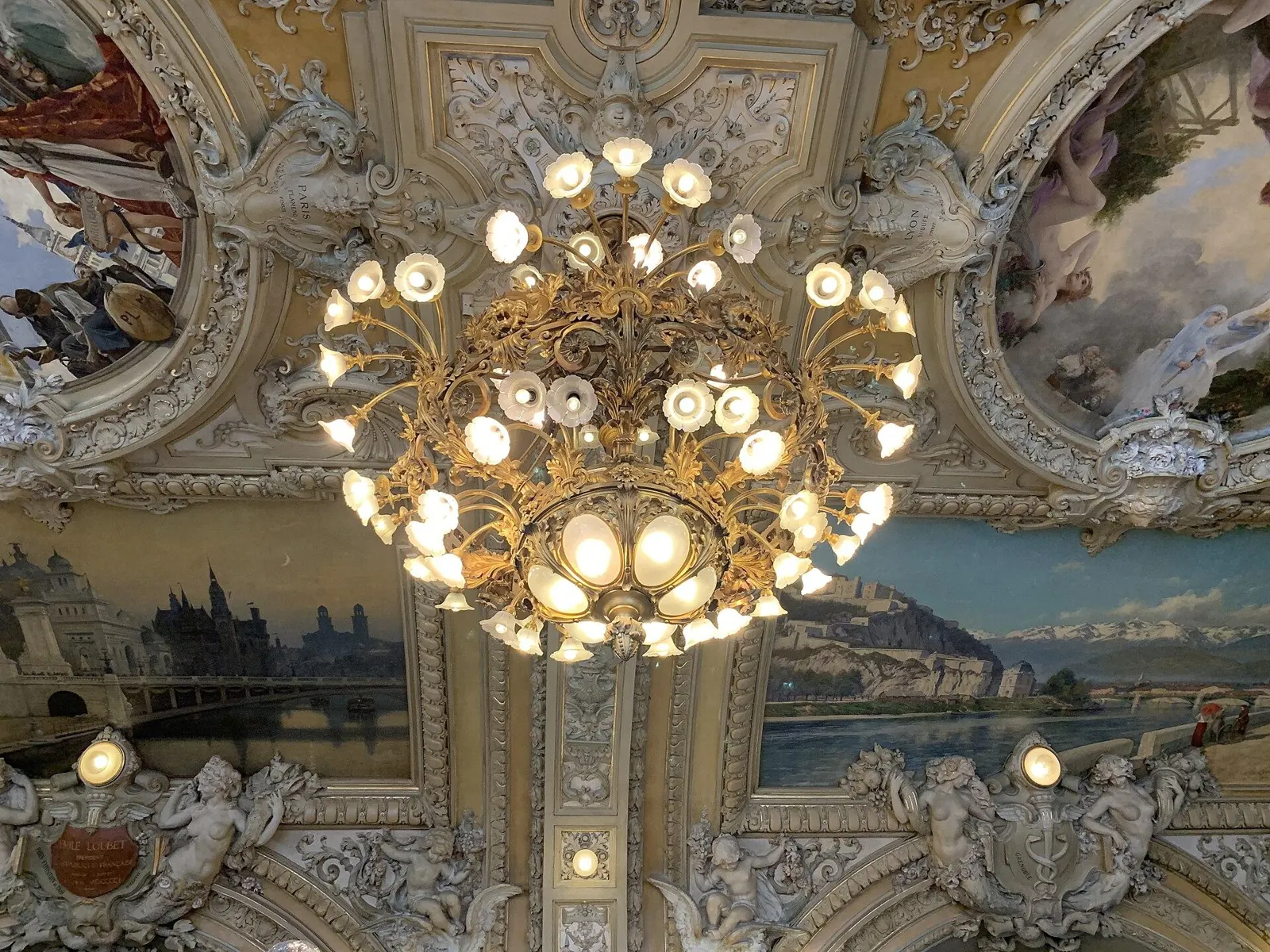
1 · Le Train Bleu, Paris
The station buffet of the Gare de Lyon, opened for the 1900 World's Fair and finished the next year, is still a restaurant, and that is the point. Its 41 paintings show the places the PLM railway would take you: Marseille, Nice, the Alps, the vineyards. They were advertising, painted by the best decorators of the day, and they still do the job, making you want to catch a train south. Sit at the bar if you can't stay for lunch, and look at the ceiling while the departures are called.
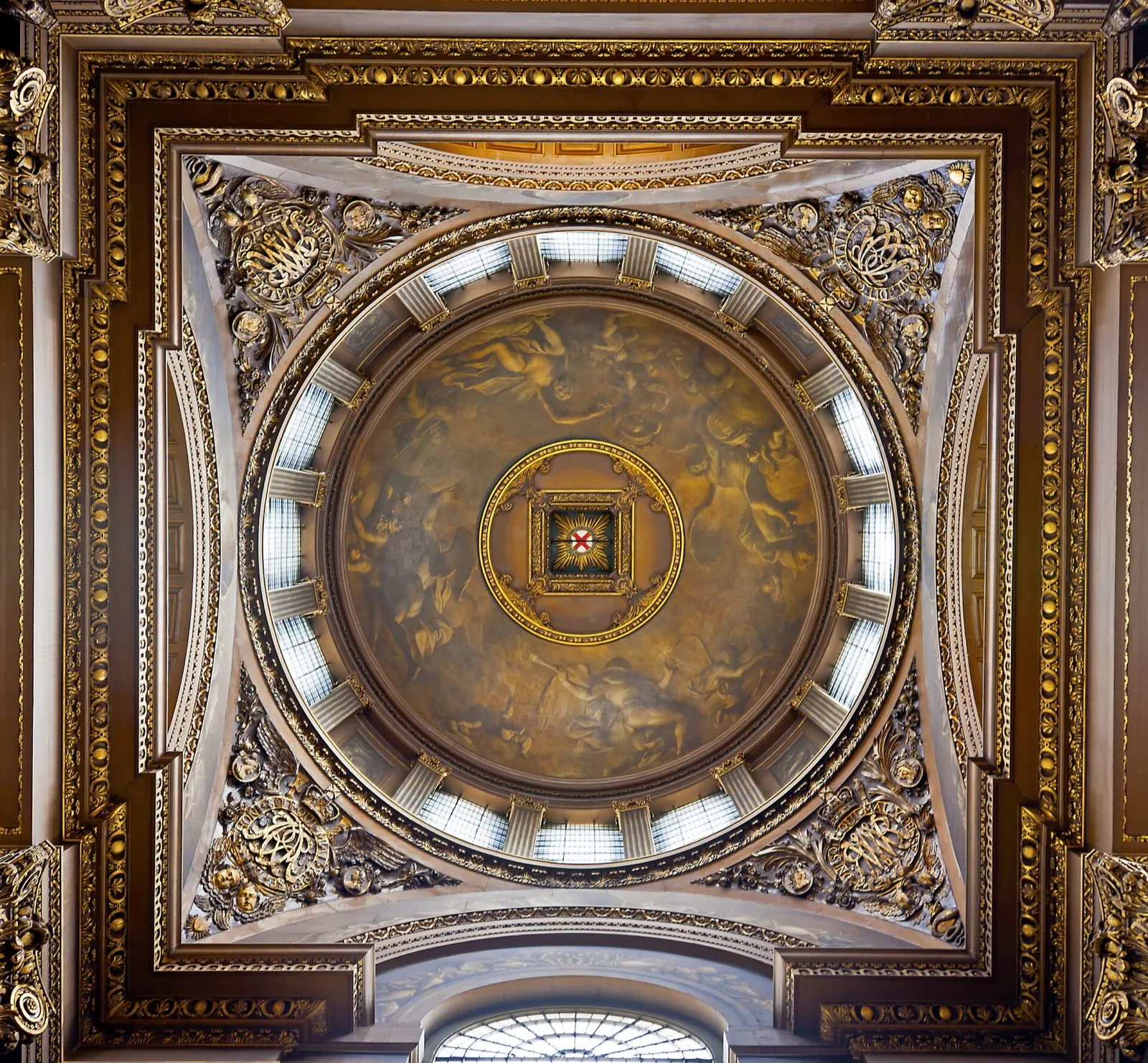
2 · The Painted Hall, London
James Thornhill spent nineteen years on the hall of the Royal Hospital for Seamen at Greenwich, from 1707 to 1726: kings, virtues, the Protestant succession, and a great deal of allegory. It was built as the pensioners' dining hall, and the old sailors found it too grand to eat in. Today it is used for dinners again, and on ordinary days you can lie on daybeds and look up. Thornhill painted himself in at the far end, one hand held out, as if asking to be paid. He had a point.
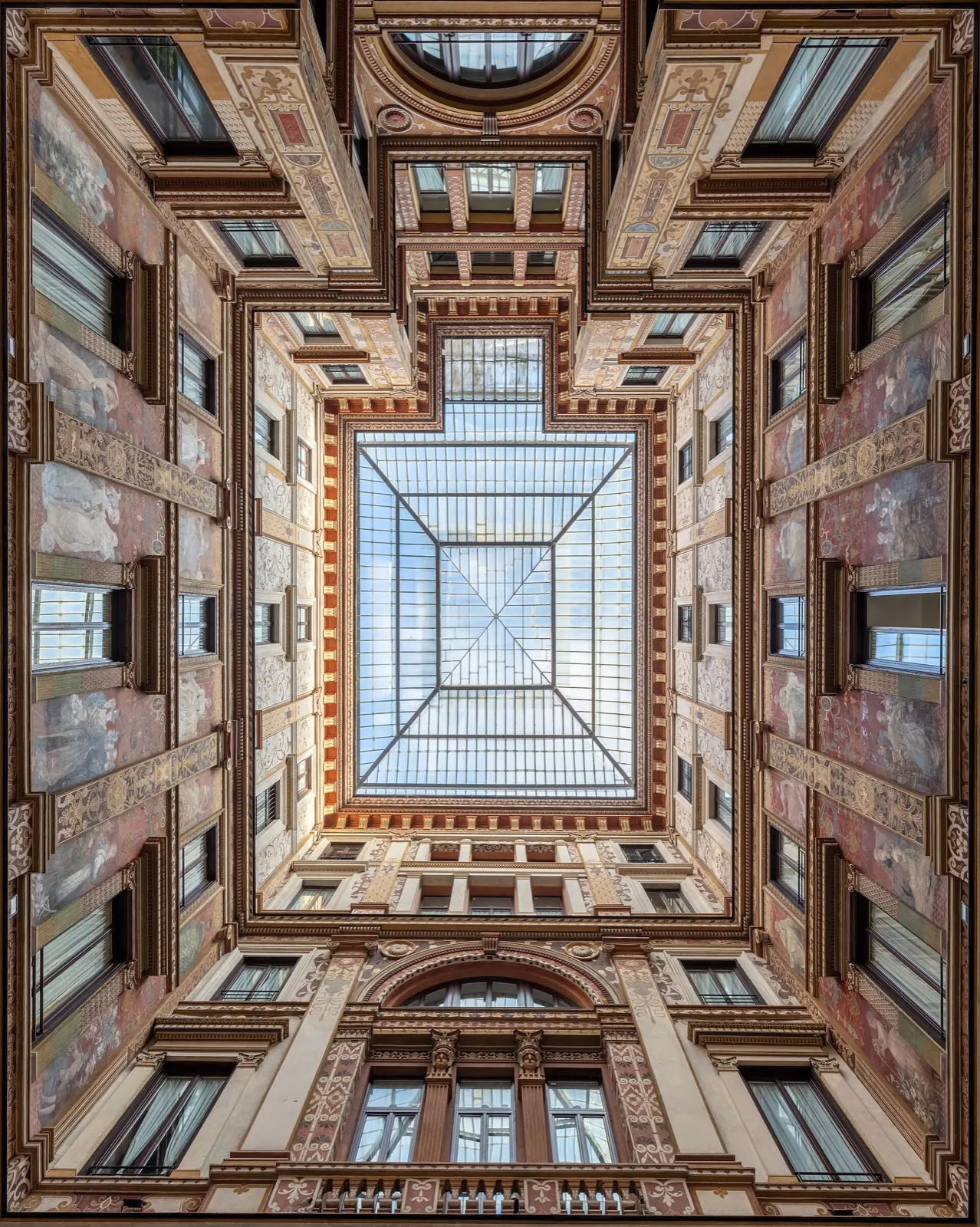
3 · Galleria Sciarra, Rome
A glass-roofed courtyard of the 1880s a few streets from the Trevi Fountain, painted from floor to roof with women in Art Nouveau dresses: Modesty, Prudence, Patience, the virtues of the ideal wife, according to the prince who commissioned it. It is the passage to an office building, and people still cut through it on their way to work, mostly without looking up. The ideology is absurd and the painting is lovely, which is a combination I find hard to resist.
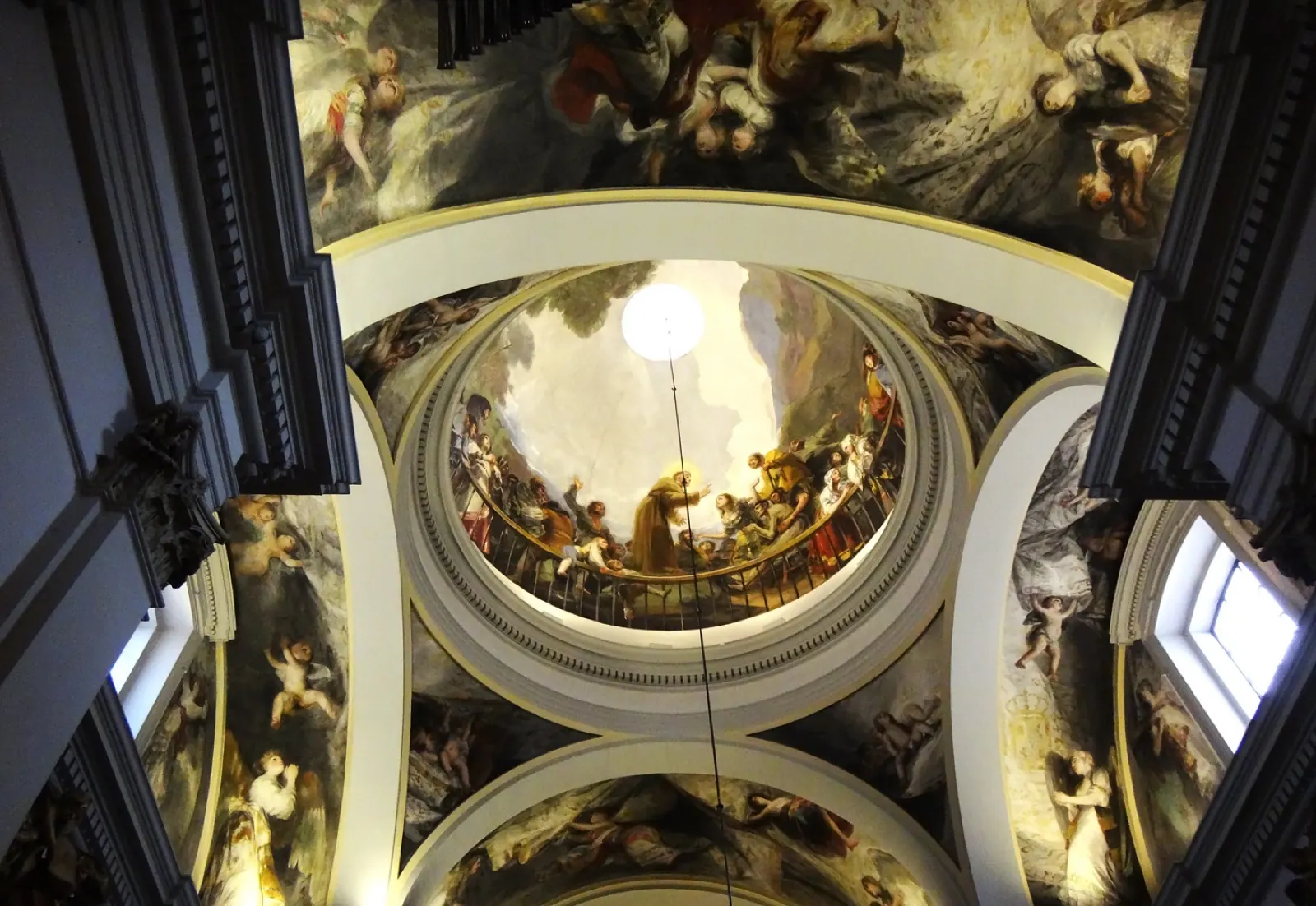
4 · San Antonio de la Florida, Madrid
A small neoclassical chapel by the railway lines, which Goya painted in 1798 in a few months. In the dome, Saint Anthony raises a dead man to clear his father of murder; around the balustrade, the people of Madrid lean over to watch, flirting, gossiping, looking anywhere but at the miracle. Goya has been buried below since 1919. The chapel holds a pilgrimage every June, when Madrid's young women come to ask the saint for a husband.
5 · Scuola di San Giorgio degli Schiavoni, Venice
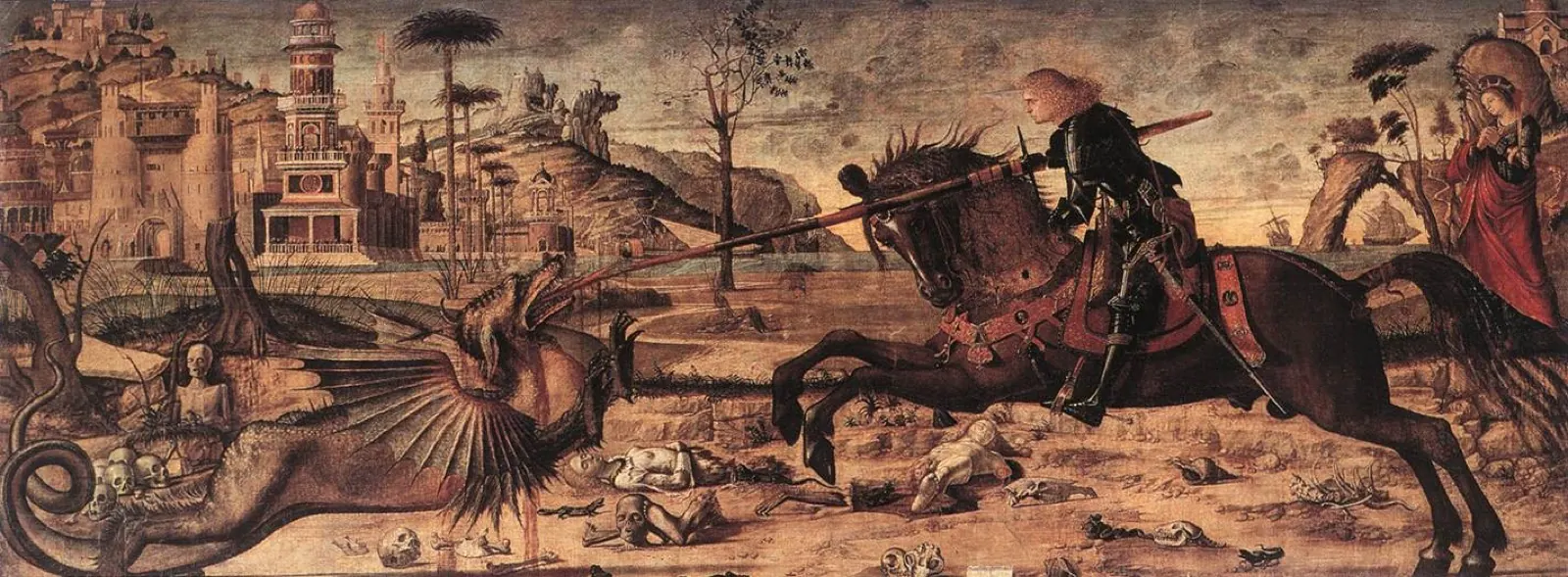
One dark, wood-panelled room where the Dalmatian community of Venice has met since the 15th century, with the cycle Vittore Carpaccio painted for it between about 1502 and 1507: Saint George and the dragon, among the half-eaten remains of its victims; Saint Jerome bringing his lion into a monastery while the monks flee; Saint Augustine in his study, looking up from his writing at a light, with a small white dog watching him. The confraternity still exists. The room feels less like a museum than a members' club that lets you in.
Each room is in its city guide, under Off-Piste. Go when they are being used: lunch at the Train Bleu, a weekday morning at Sciarra, the June pilgrimage at La Florida.
Filed under: Places · Lists · City guides · All Curator's Highlights
More Curator's Highlights
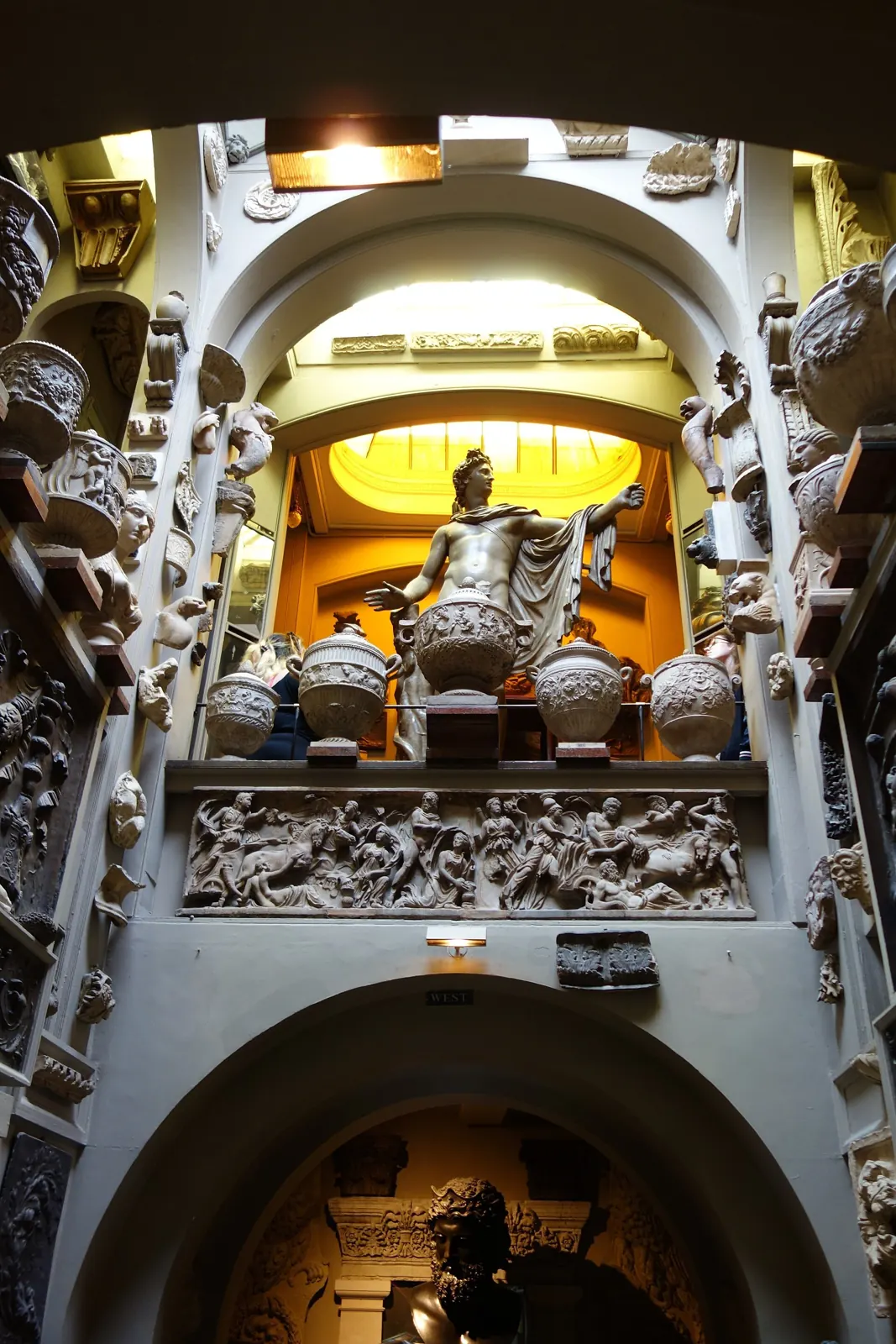
A house built to be haunted by objects
The architect kept everything, and an Act of Parliament made sure nothing would ever move.
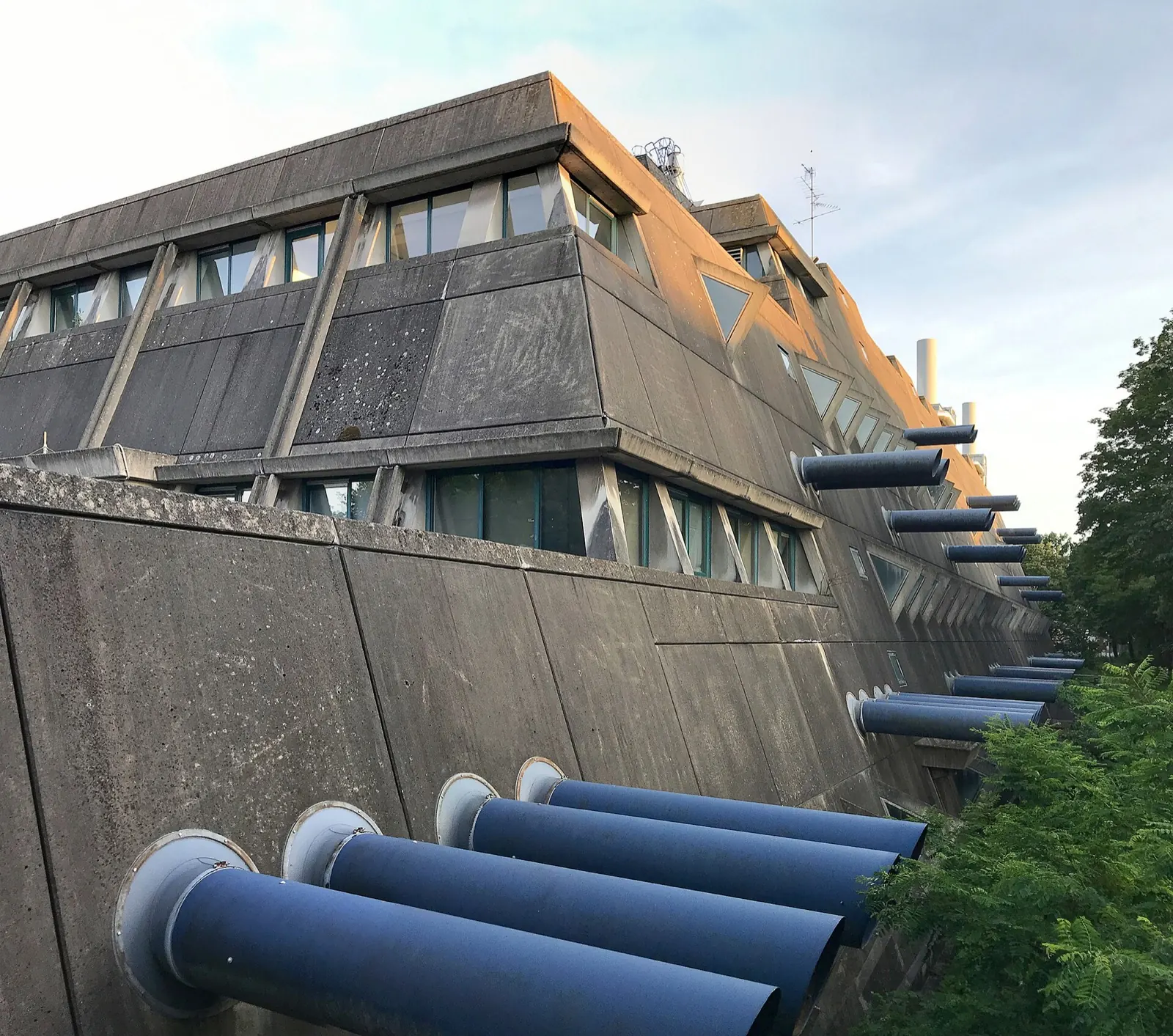
The Mäusebunker: Berlin's beautiful monster
A laboratory for animals that looks like a battleship, and the people who refused to let it be torn down.
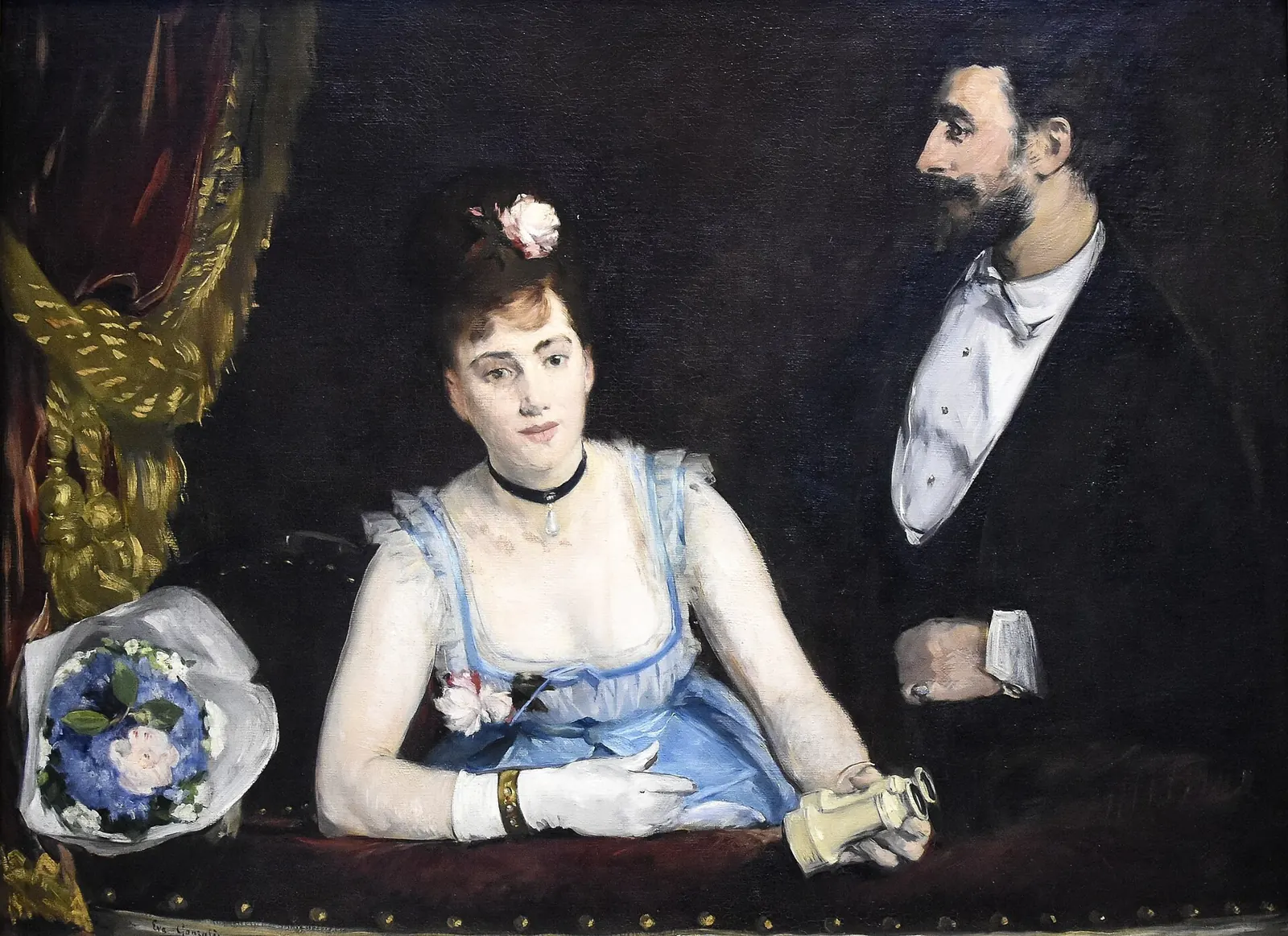
Eva Gonzalès, beyond Manet's shadow
Manet's only pupil, a painter of theatre boxes and waking women, finally has a retrospective.