Kim Swoo-geun's Seoul
Every September, the art world flies to Seoul for Frieze and spends a week between Gangnam and Hannam. Very few visitors notice that the city has a great modern architect of its own, whose buildings explain a good deal about how Korea built itself after the war. His name was Kim Swoo-geun, and once you start looking, you see him everywhere.
Kim was born in 1931 in Chongjin, in what is now North Korea, came to Seoul as a boy, and studied architecture in Japan in the 1950s. He came back to a country rebuilding at breathtaking speed, under military rule, and he worked for that state, which is the uncomfortable part of the story. He was also its most independent architectural mind. He died in 1986, at 55.
Space, the building and the magazine
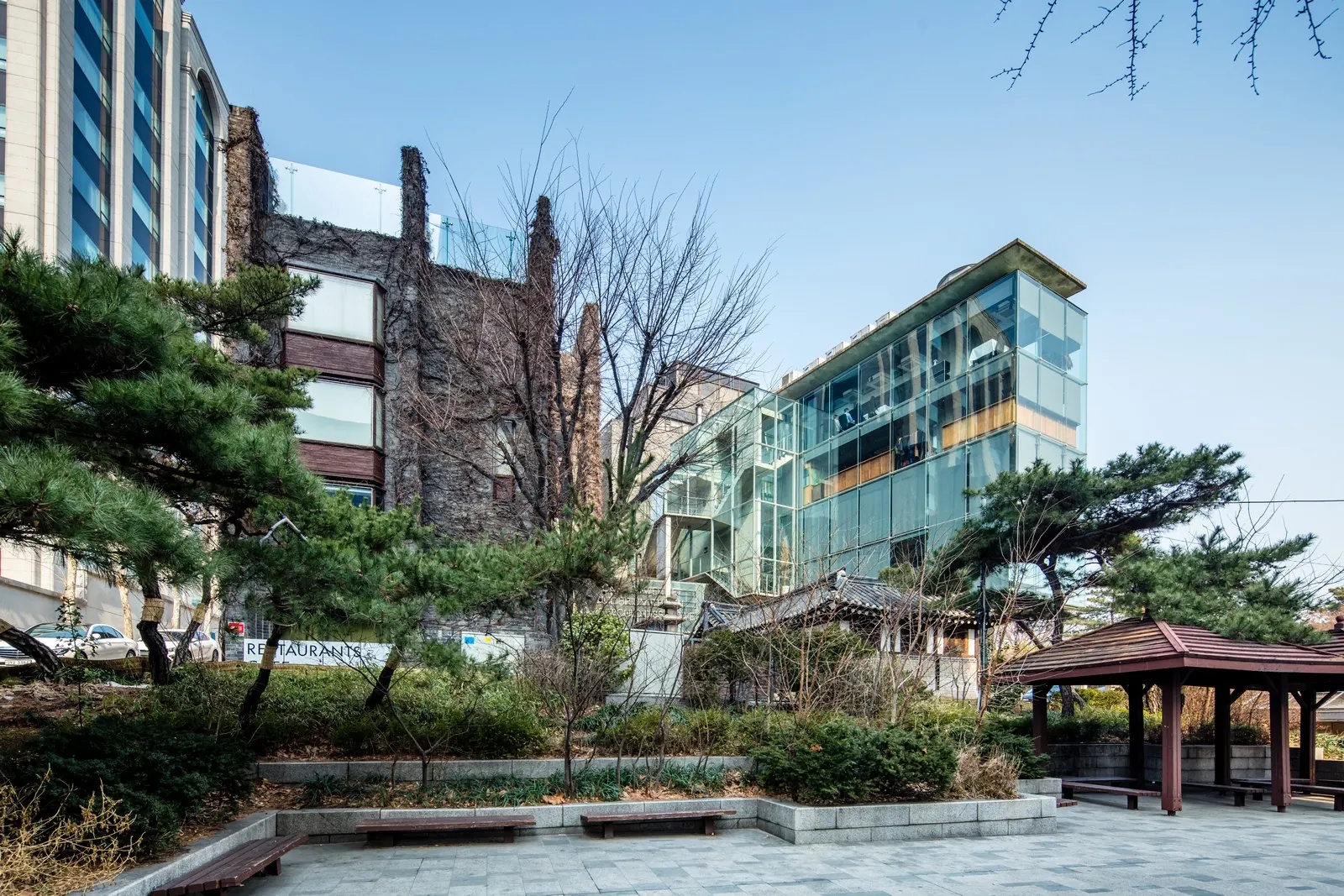
In 1966 he founded Space (Gonggan), a monthly magazine of architecture and the arts that still exists, and in the 1970s he built his office next to the palace of Changdeokgung. The Space building is one of the most beautiful modern buildings in Asia: small, black brick, covered in ivy, a labyrinth of half-levels and narrow stairs at the scale of a traditional house. Kim talked about the "intimate scale" of Korean architecture, rooms sized to the human body, and you can feel it on the stairs.
The connection I most want you to know about is in its basement. Kim built a small theatre there, Space Sarang, and turned his office into a meeting place for the avant-garde: dancers, musicians, painters, poets. In 1978, four musicians played traditional Korean percussion on its stage in a new arrangement for the concert hall. They called themselves SamulNori, and their music went around the world. Few modern buildings anywhere can claim to have launched a musical genre.
The magazine mattered as much as the building. In a country where architecture was mostly a matter of speed and quantity, Space published essays, criticism, photographs of traditional houses and the work of young artists side by side, and for decades it was where Korean architects learned to argue with each other.
A church without a cross
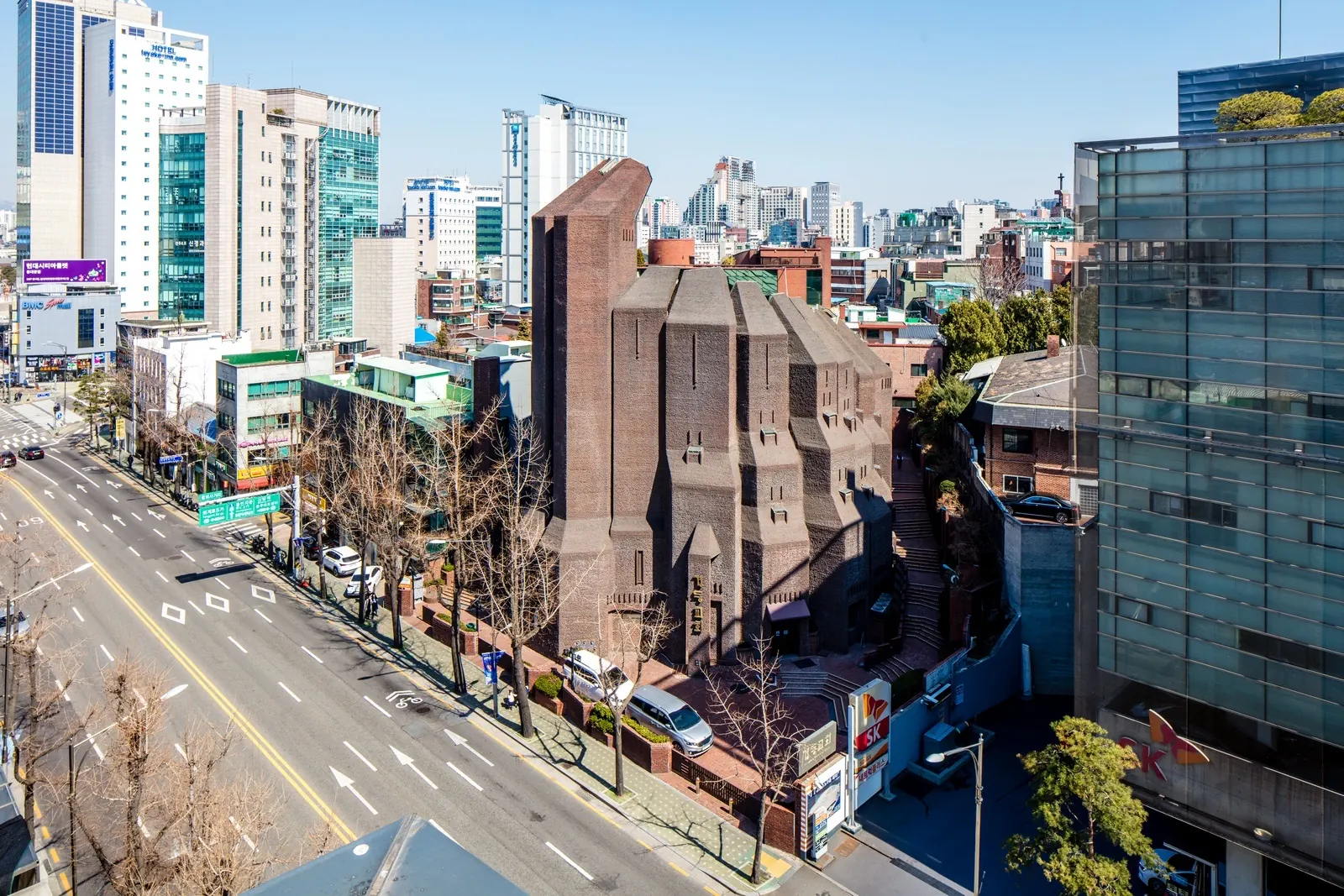
Kyungdong Presbyterian Church (1980) is a hill of broken red brick in Jangchung-dong, with no windows on the street and no cross on its façade. You enter from behind, up an outside stair, as if climbing to a shrine. Inside, light falls from a single slot above the altar. People compare it to hands joined in prayer, or to a medieval fortress. I think of it as the most generous building in Seoul: severe outside, warm within.
He had learned that lesson the hard way. In 1967 his design for the National Museum in Buyeo was attacked in the press for looking like a Japanese shrine, barely twenty years after the end of the colonial occupation. The controversy marked him. The buildings that followed, starting with Space, look for a modern Korean language in materials and scale rather than in borrowed roofs.
The megastructure and the moon jar
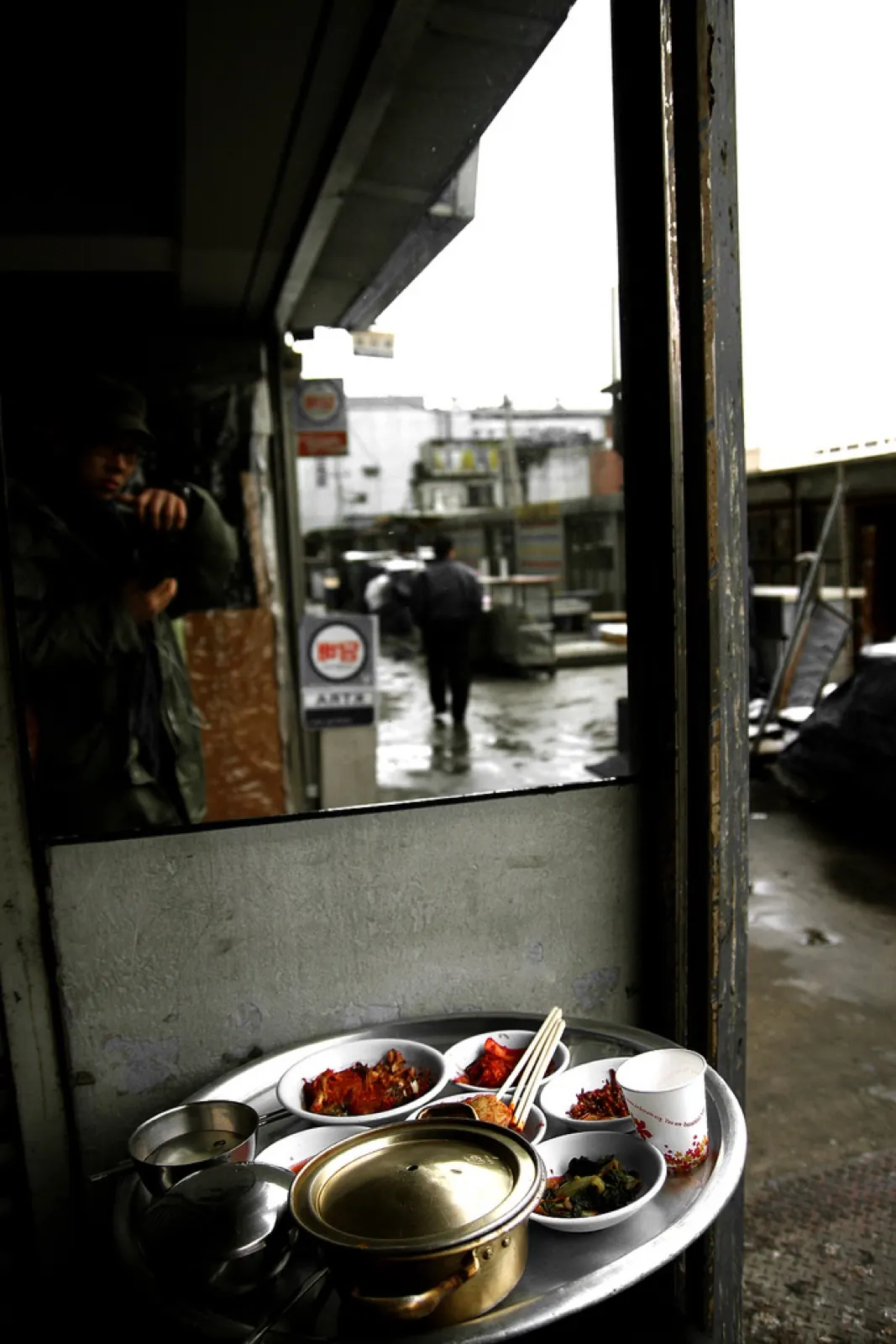
Not everything was loved. In the late 1960s Kim was involved in Sewoon Sangga, a kilometre-long chain of concrete blocks of shops and flats through the old centre, which became the city's electronics market and, for decades, its most criticised building. The city once planned to tear it down; instead, it reopened the elevated decks, and the repair workshops are still there. Walk the rooftop and you see Seoul's past and future at once: the royal shrine of Jongmyo on one side, the towers on the other.
His last great public building was the Olympic Stadium at Jamsil, finished in 1984 for the 1988 Games, whose curving rim was inspired by the line of a Joseon porcelain moon jar. A stadium modelled on a pot: that is Kim's argument in one image. Modern Korea did not have to choose between concrete and tradition, so long as it remembered the scale and the curve of what came before.
A stadium modelled on a pot: modern Korea did not have to choose.
The intimate scale
What connects these very different buildings, a black-brick office, a red-brick church, a concrete megastructure and an Olympic stadium? I think it is Kim's obsession with how a body moves through space. His buildings are full of thresholds, half-levels, narrow passages that open suddenly onto light, stairs that turn back on themselves. It is the experience of a traditional Korean house, where you pass from courtyard to veranda to room, translated into modern materials. Even Sewoon, at its best, was meant to be a street in the air, a place to walk, not just to shop.
That is also why his work is so easy to miss. Kim rarely built monuments meant to be seen from a distance; he built places meant to be walked through. You don't photograph the Space building so much as get slightly lost in it. Seoul has changed beyond recognition since his death, and much of what he built is threatened, altered or gone, but the few buildings that remain are a key to the city's other, slower self.
How to see him
Start at the Space building, next to Changdeokgung; its use has changed over the years and access varies, but the street is enough. Walk south through Jongno to the Sewoon decks. Take the metro to Dongguk University for Kyungdong Church, open to visitors outside services. If you are in town for Frieze, make an afternoon of it. You will understand the city better than you will from a week of booths at COEX.
Filed under: Places · Architecture · Seoul · Seoul city guide · All Curator's Highlights
More Curator's Highlights
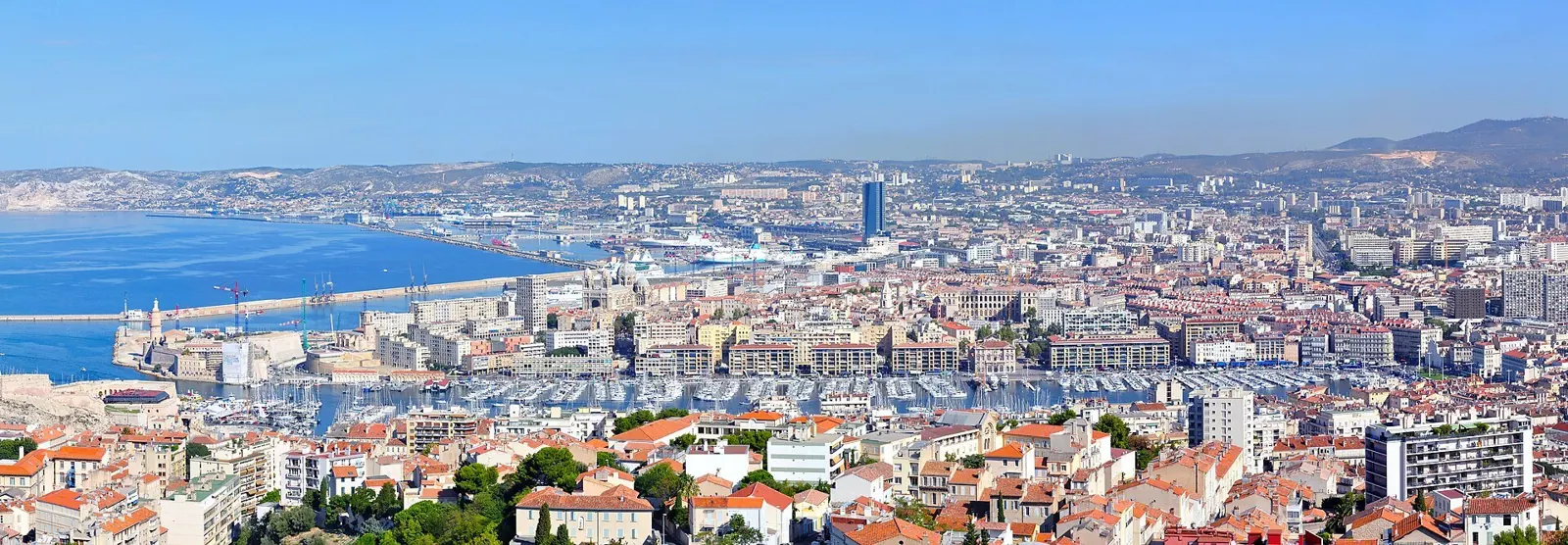
Marseille, the Surrealists' waiting room
In 1940–41, the Surrealists waited here for visas to escape the war, and left behind a deck of cards.
Athens: antiquity in the present tense
A museum aligned with a temple, and a path made from the city's broken houses.
A house built to be haunted by objects
The architect kept everything, and an Act of Parliament made sure nothing would ever move.