A city that rebuilt itself around its museums, its ruins and its artists. Cheap studios made it Europe's capital of making; the history is never out of sight.
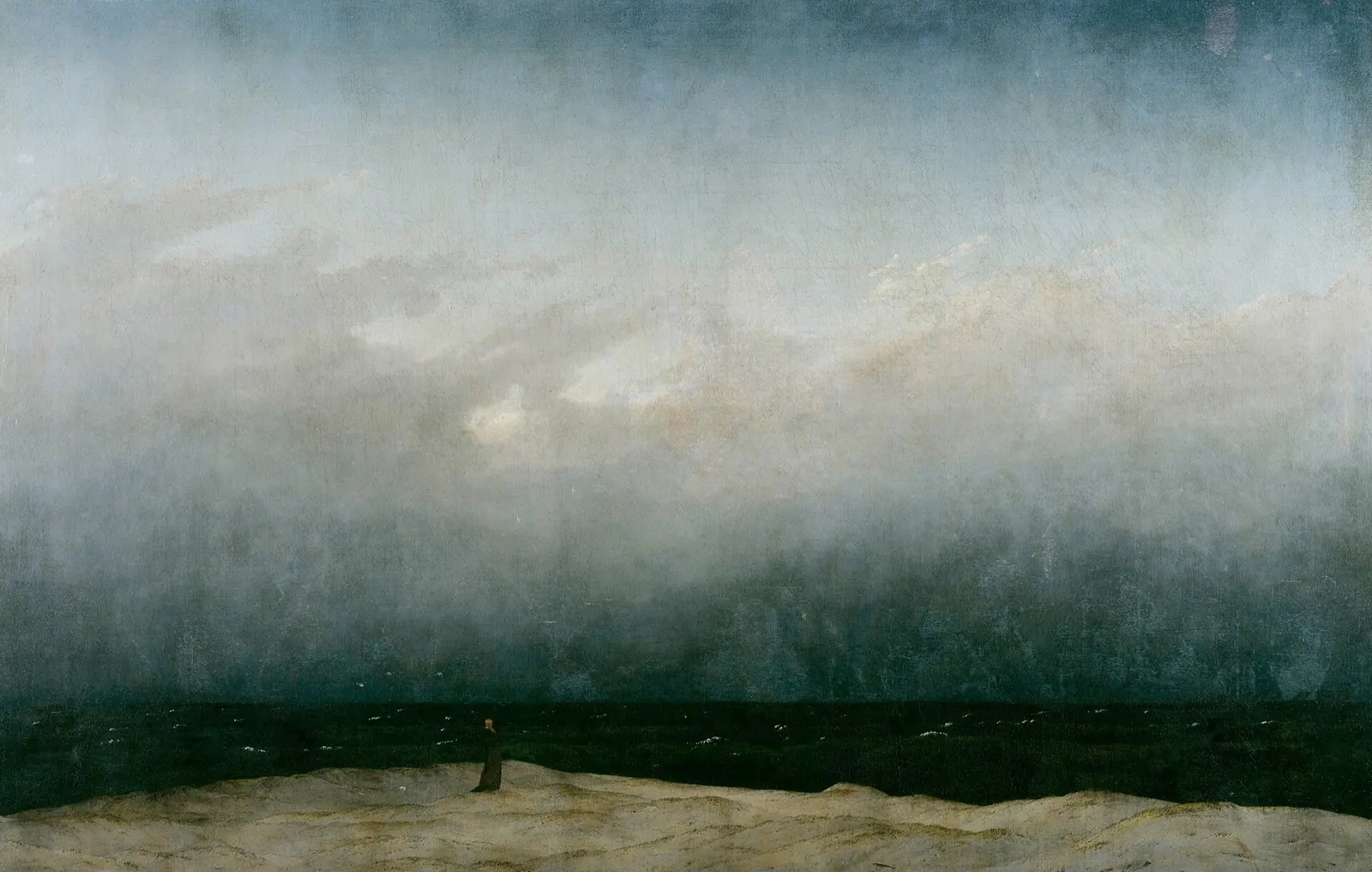
Caspar David Friedrich, The Monk by the Sea, 1808–10. Alte Nationalgalerie, Berlin · Public domain
Best monthsLate April–May (Gallery Weekend) and September (Berlin Art Week)
Art calendarGallery Weekend Berlin (late April/May) · Berlin Art Week (September) · Berlin Biennale (even years)
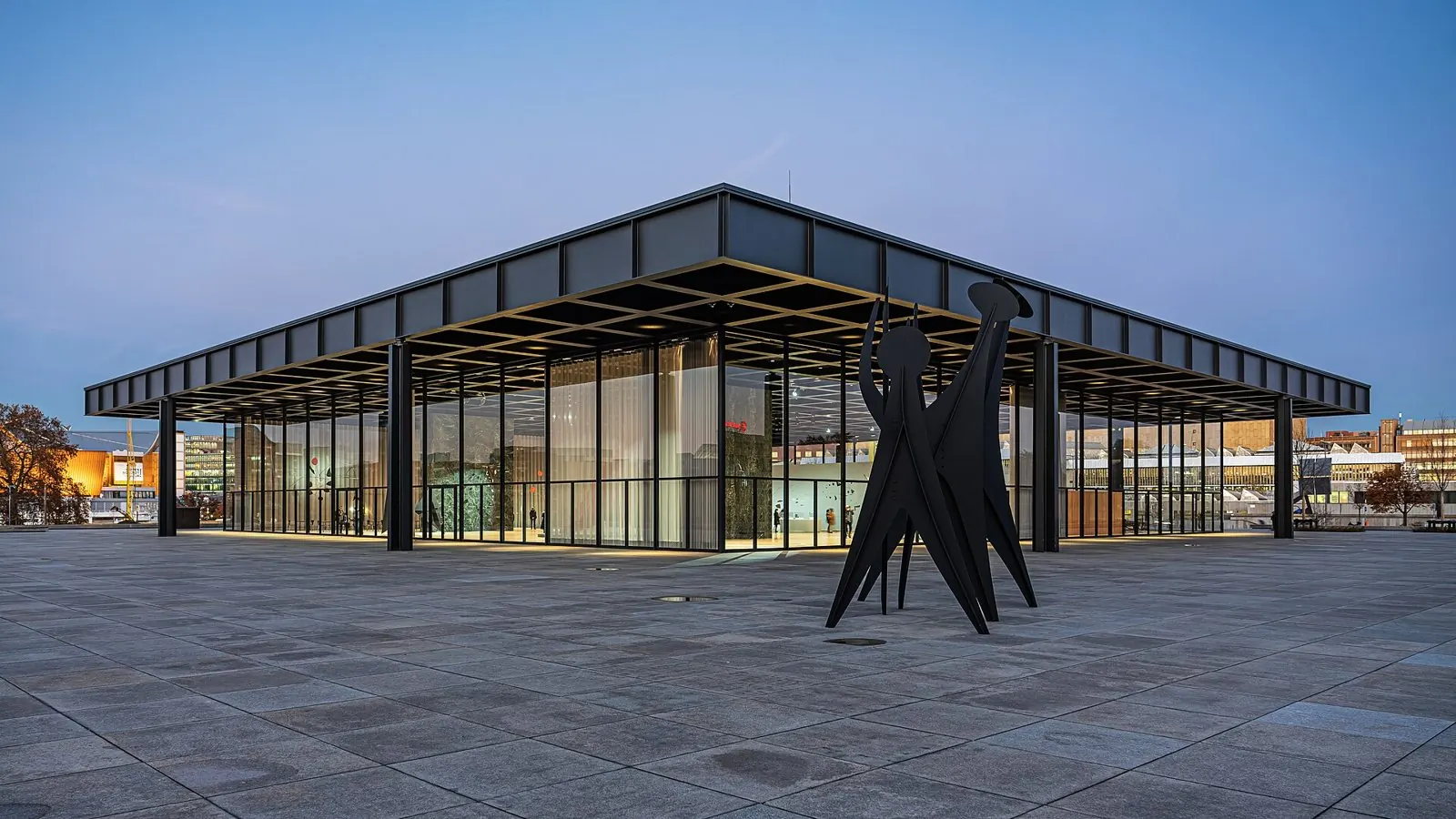
Mies van der Rohe's last building (1968): a steel roof floating over a glass hall, restored by David Chipperfield and reopened in 2021. 20th-century art downstairs.
Look for: The empty upper hall, where the architecture is the exhibition.
Closed Mondays
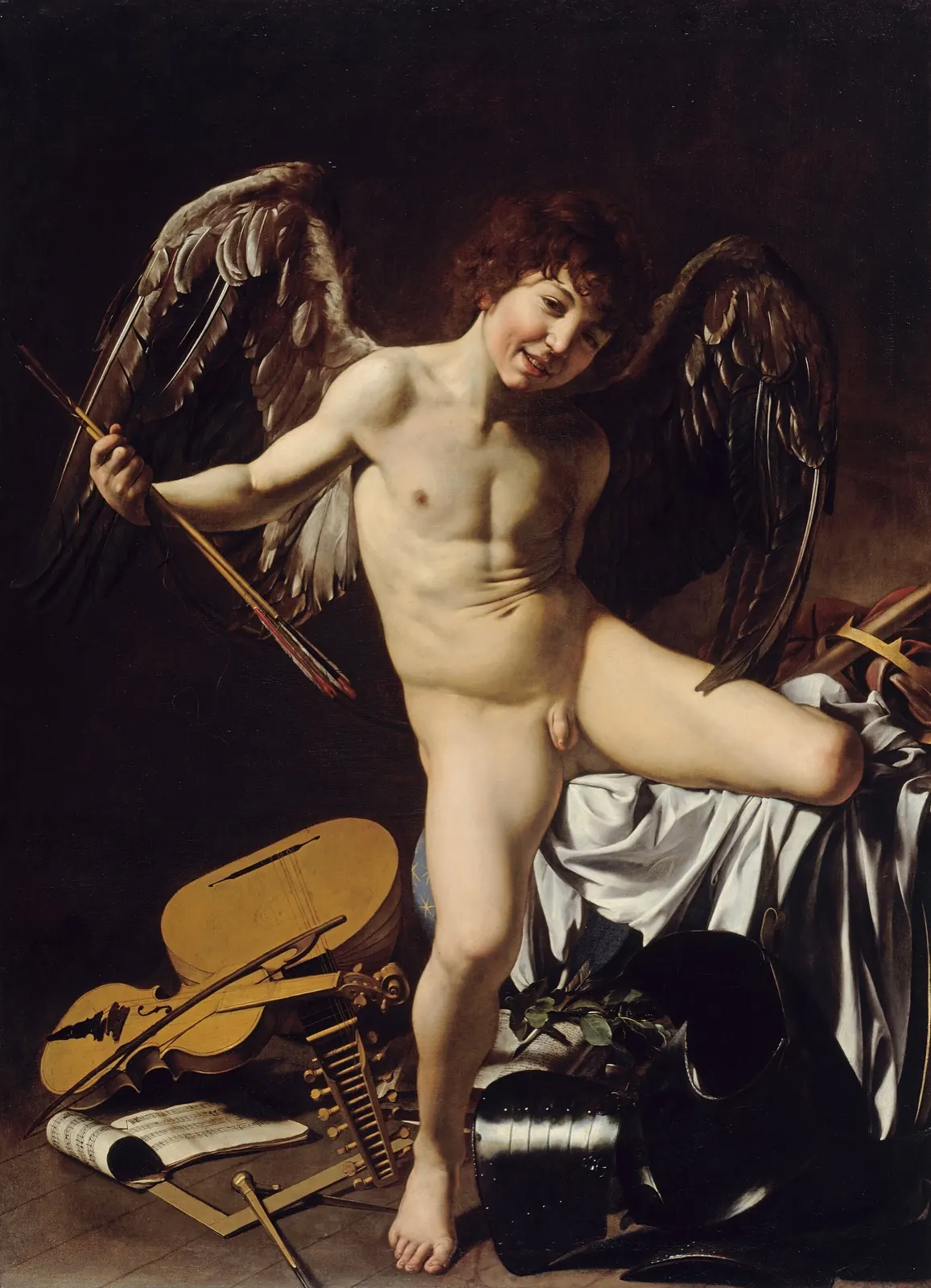
Caravaggio, Amor Vincit Omnia, 1601–02. Gemäldegalerie, Berlin · Public domain
Museum · Kulturforum
Gemäldegalerie
One of the world's great collections of old-master painting, often half-empty. Vermeer, Rembrandt, Bruegel, Dürer, and two Caravaggios.
Look for: Caravaggio's Amor Vincit Omnia, the cheekiest painting in Berlin.
Closed Mondays
Caspar David Friedrich, The Monk by the Sea, 1808–10. Alte Nationalgalerie, Berlin · Public domain
Museum · Museum Island
Alte Nationalgalerie
19th-century painting in a temple on Museum Island, with the best collection of Caspar David Friedrich anywhere.
Look for: Friedrich's Monk by the Sea and Abbey in the Oakwood, hung side by side as he intended.
Closed Mondays
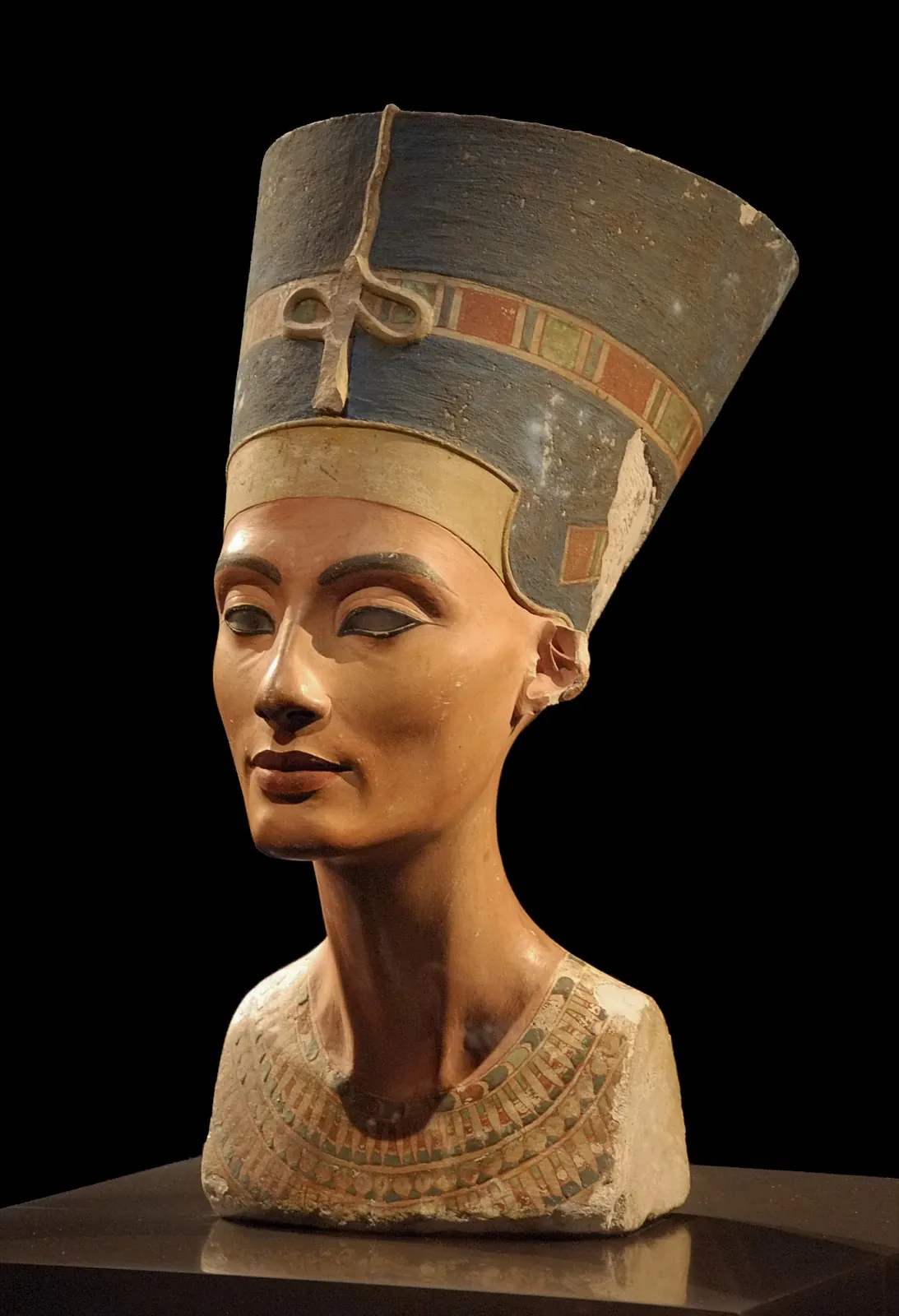
Bust of Nefertiti, c. 1345 BC. Neues Museum, Berlin · CC BY-SA 3.0
Museum · Museum Island
Neues Museum
David Chipperfield's restoration (2009) kept the war damage visible: bullet holes, scorched frescoes, raw brick. Home to the bust of Nefertiti.
Look for: Nefertiti's missing left eye.
Timed tickets · closed Mondays
Jean-Pierre Dalbéra from Paris, France · CC BY 2.0
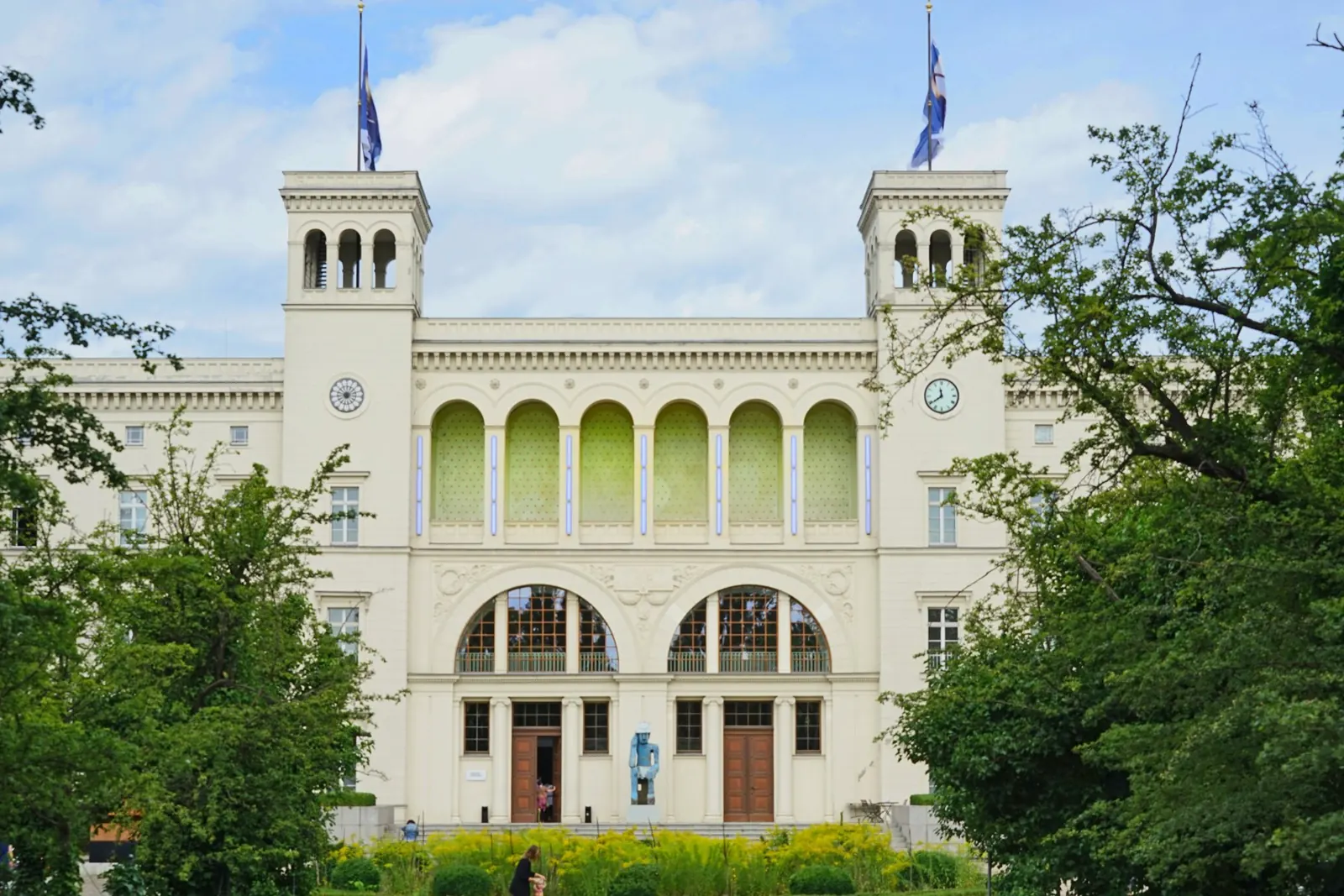
Museum · Moabit
Hamburger Bahnhof
A 19th-century railway terminus turned into the national museum of contemporary art, with long halls built for large installations.
Look for: The Rieckhallen, the old freight sheds behind the station.
Closed Mondays
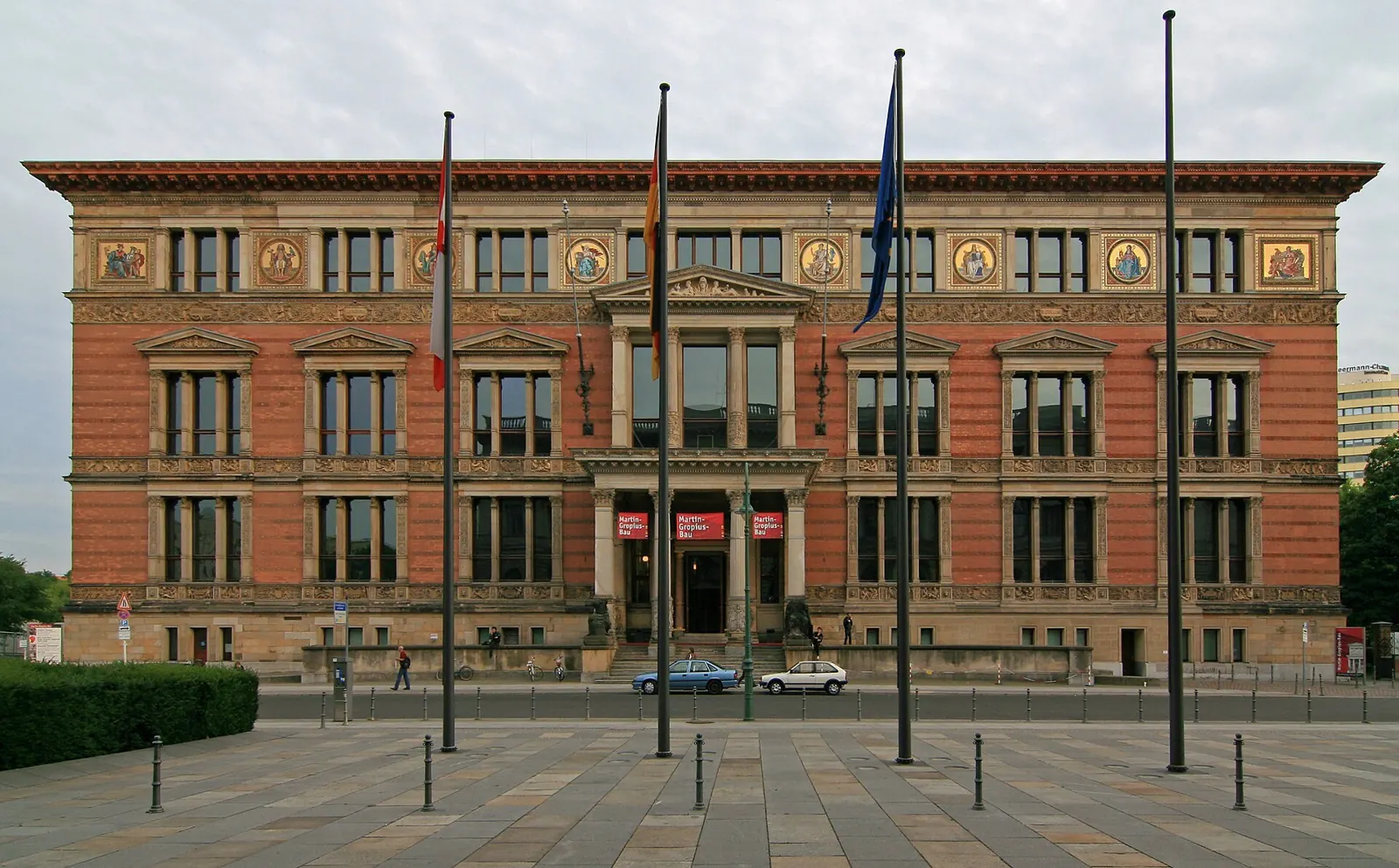
Jensens · Public domain
Exhibition hall · Kreuzberg
Gropius Bau
A Renaissance-revival exhibition palace that stood next to the Wall, now a venue for big international shows.
Look for: The atrium, and the stretch of Wall outside on Niederkirchnerstraße.
Closed Tuesdays
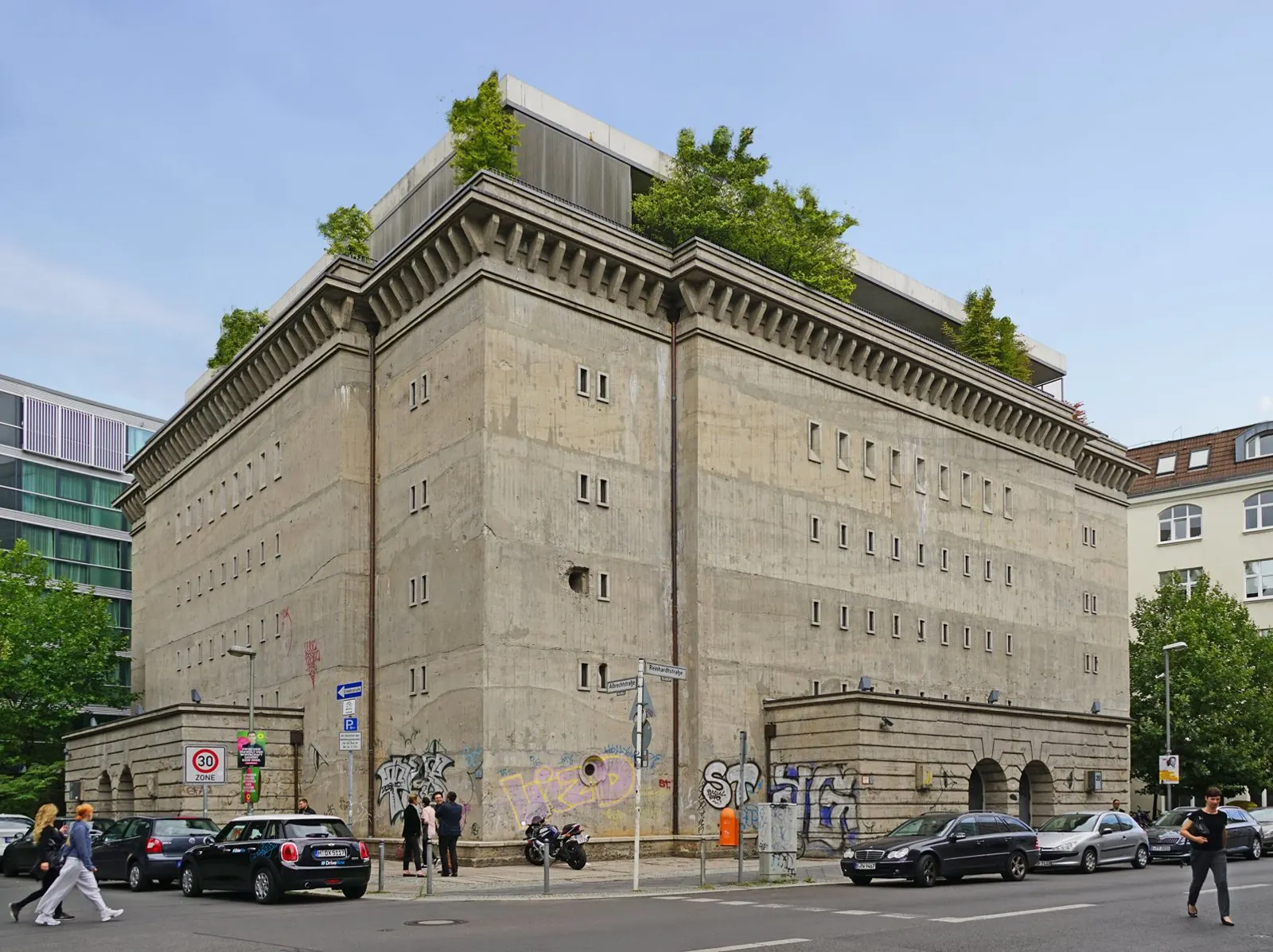
Sammlung Boros, Berlin · CC BY 2.0
Collection · Mitte
Sammlung Boros
A private contemporary collection inside a five-storey Second World War bunker, later a techno club and a fruit store. Guided tours only.
Look for: The walls, which are 1.8 metres thick.
Guided tours by booking only · weekends
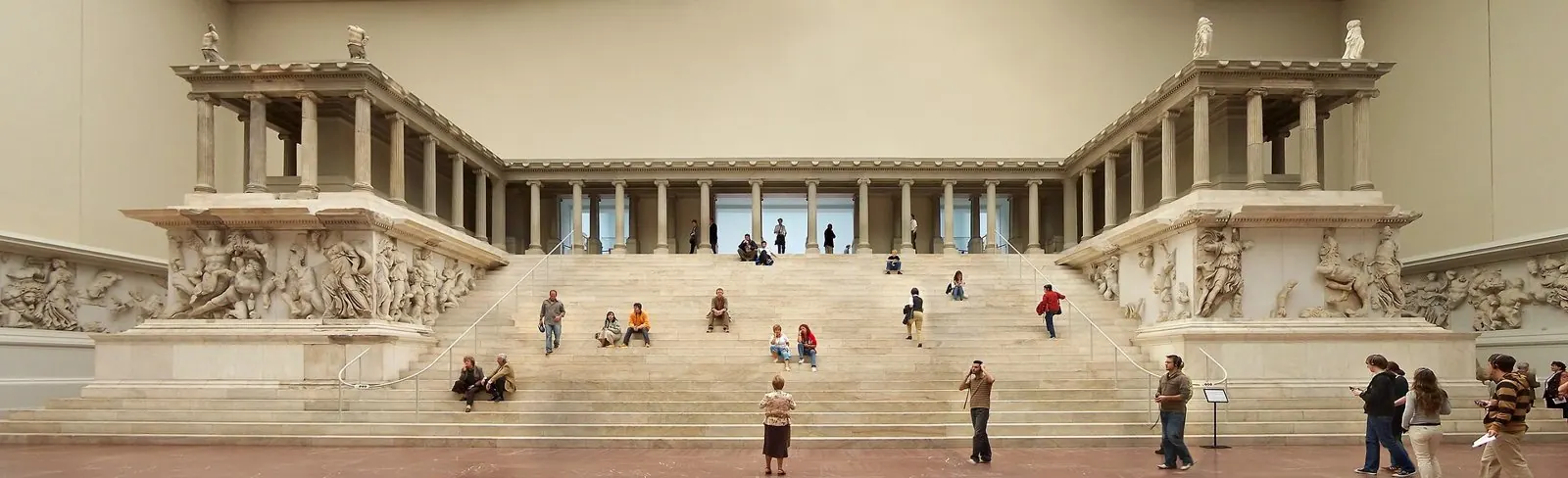
Pergamonmuseum, Berlin · CC BY-SA 3.0
Museum · Museum Island
Pergamonmuseum
Closed since 2023. It partly reopens on 4 June 2027 with the Pergamon Altar; the Ishtar Gate wing stays closed for longer.
Look for: Plan a spring 2027 visit around the altar's return.
Closed until 4 June 2027
Off the list
Off-Piste in Berlin
Rooms, ruins and curiosities: the city's other museum.
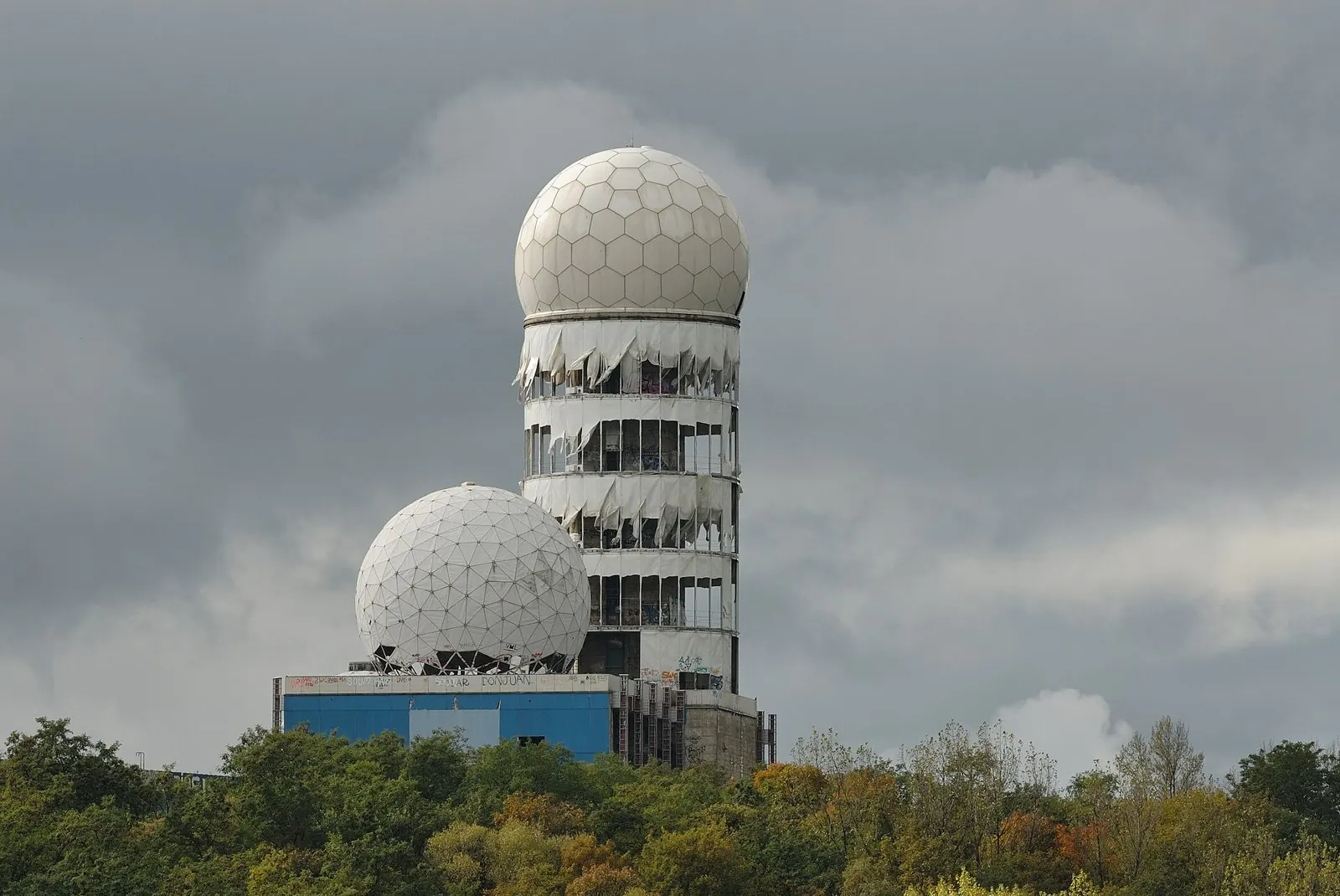
Teufelsberg, Berlin · CC BY-SA 3.0
Ruin · Grunewald
Teufelsberg
A hill made of war rubble, topped by an abandoned American listening station whose domes are now covered in graffiti.
Go late afternoon for the view over the Grunewald.
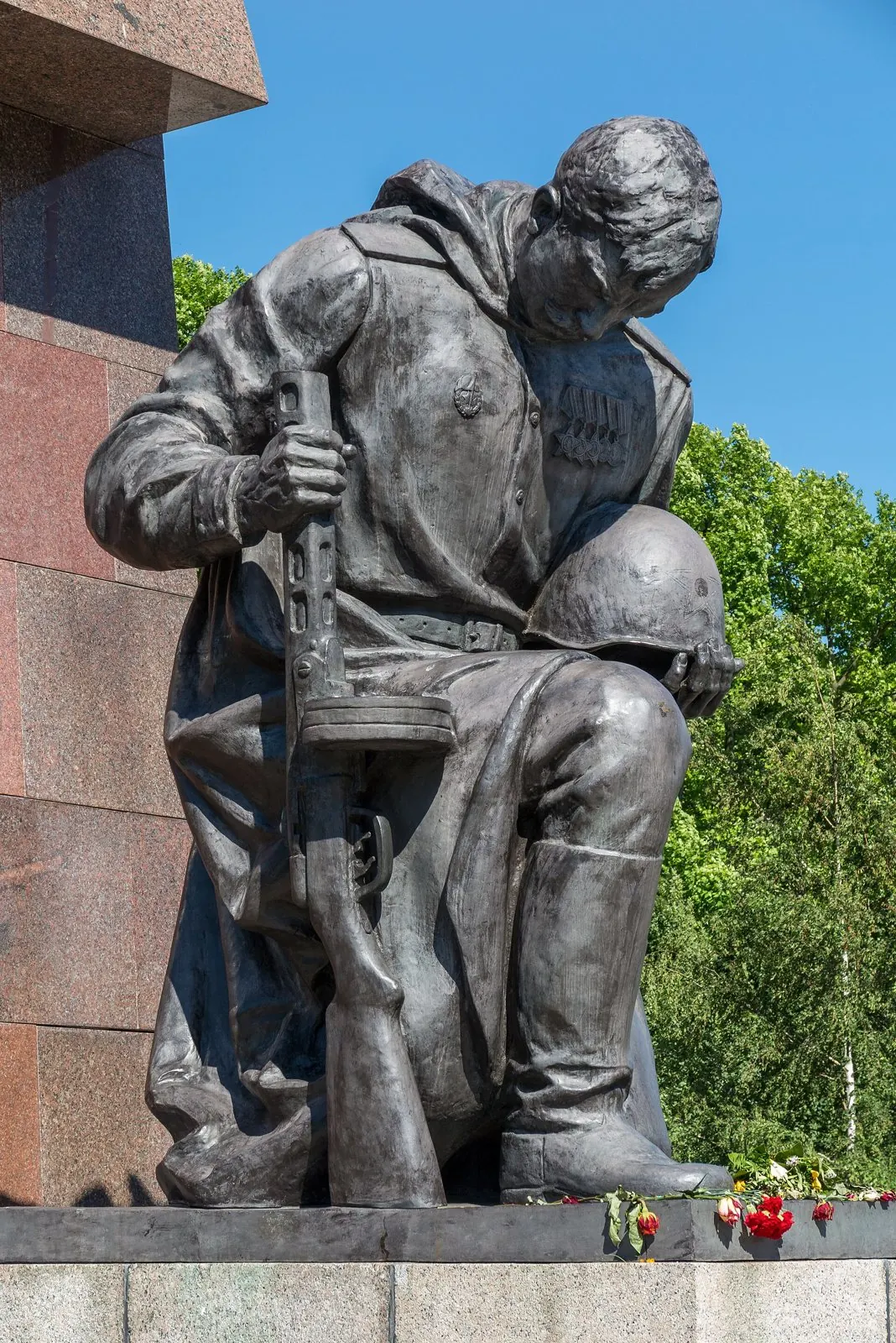
Soviet War Memorial, Treptower Park, Berlin · CC BY-SA 4.0
Monument · Treptow
Soviet War Memorial, Treptower Park
A colossal memorial of 1949: a 12-metre Soviet soldier holding a child, standing on a broken swastika, above sarcophagi carved with Stalin's words.
Walk the whole axis from the mourning Motherland to the soldier.
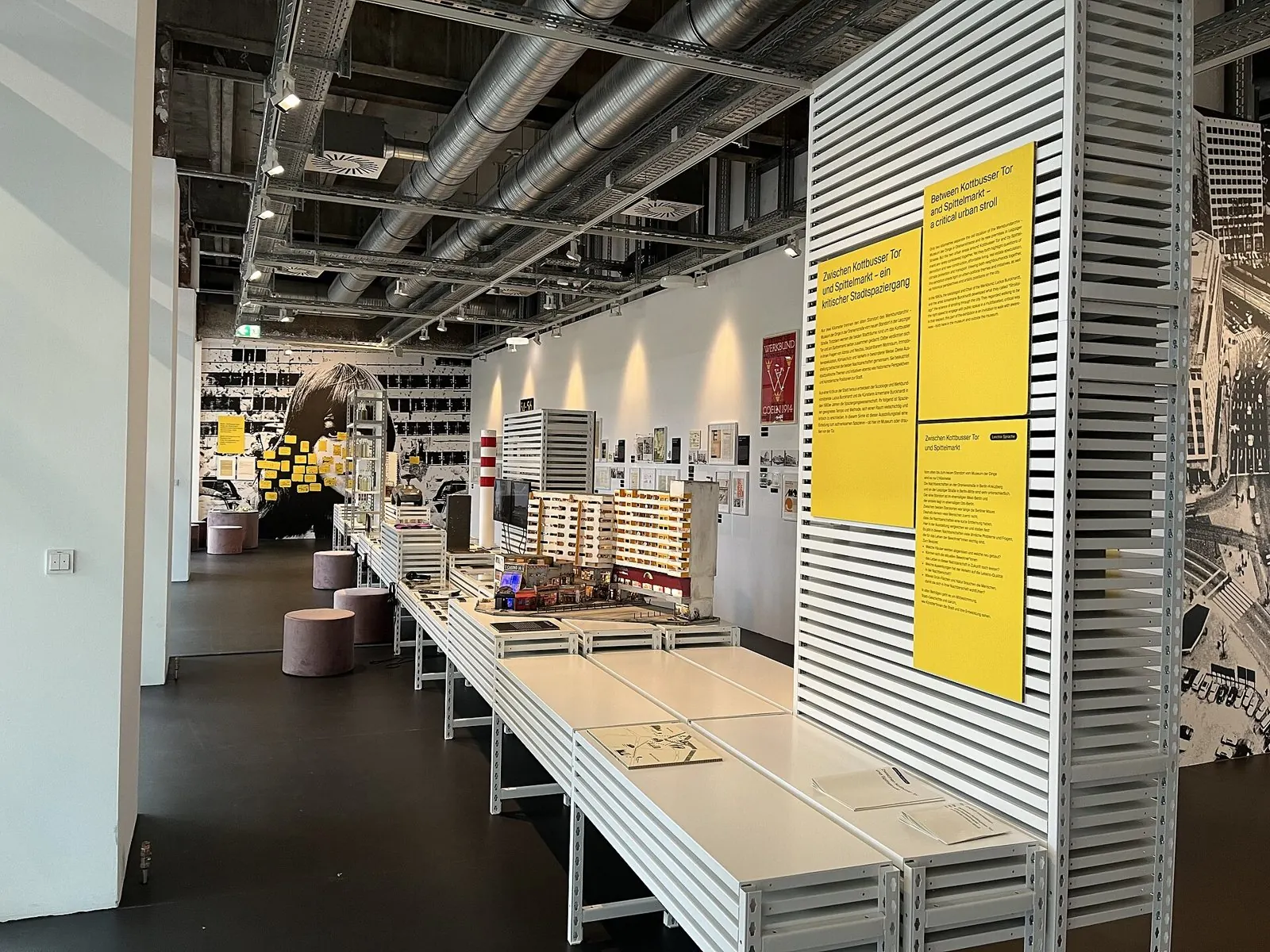
Museum der Dinge, Berlin · CC BY-SA 4.0
Unusual museum · Kreuzberg
Museum der Dinge
The archive of the Deutscher Werkbund: thousands of everyday objects from kettles to Nazi kitsch, arranged in open cases by type, colour and shape.
The Frankfurt Kitchen.
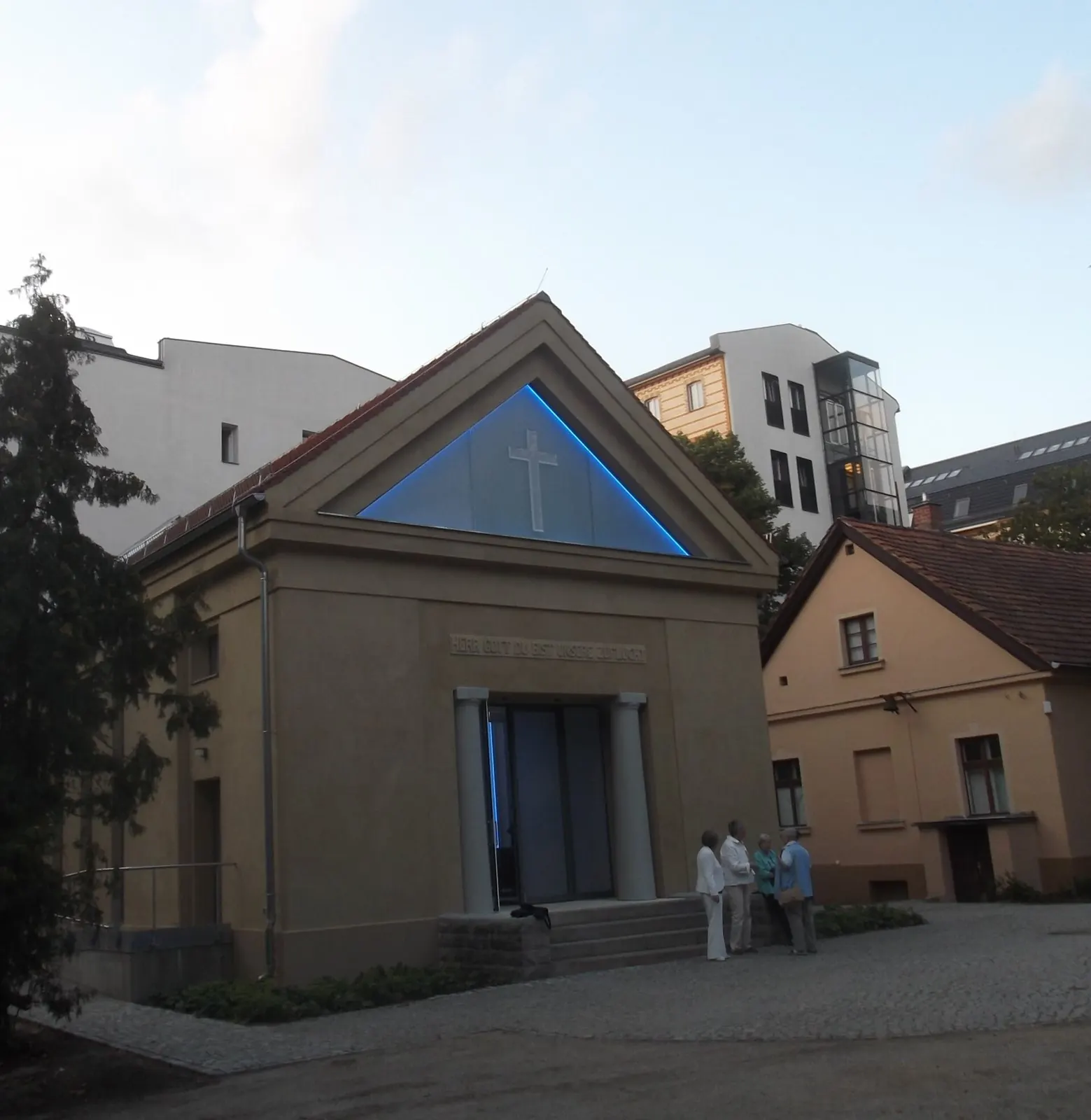
James Turrell's chapel, Dorotheenstadt Cemetery, Berlin · CC BY-SA 4.0
Cemetery · Mitte
Dorotheenstadt Cemetery
Brecht, Hegel, Fichte, Heinrich Mann and the architect Schinkel, under trees beside Brecht's last house.
James Turrell's light installation in the cemetery chapel.
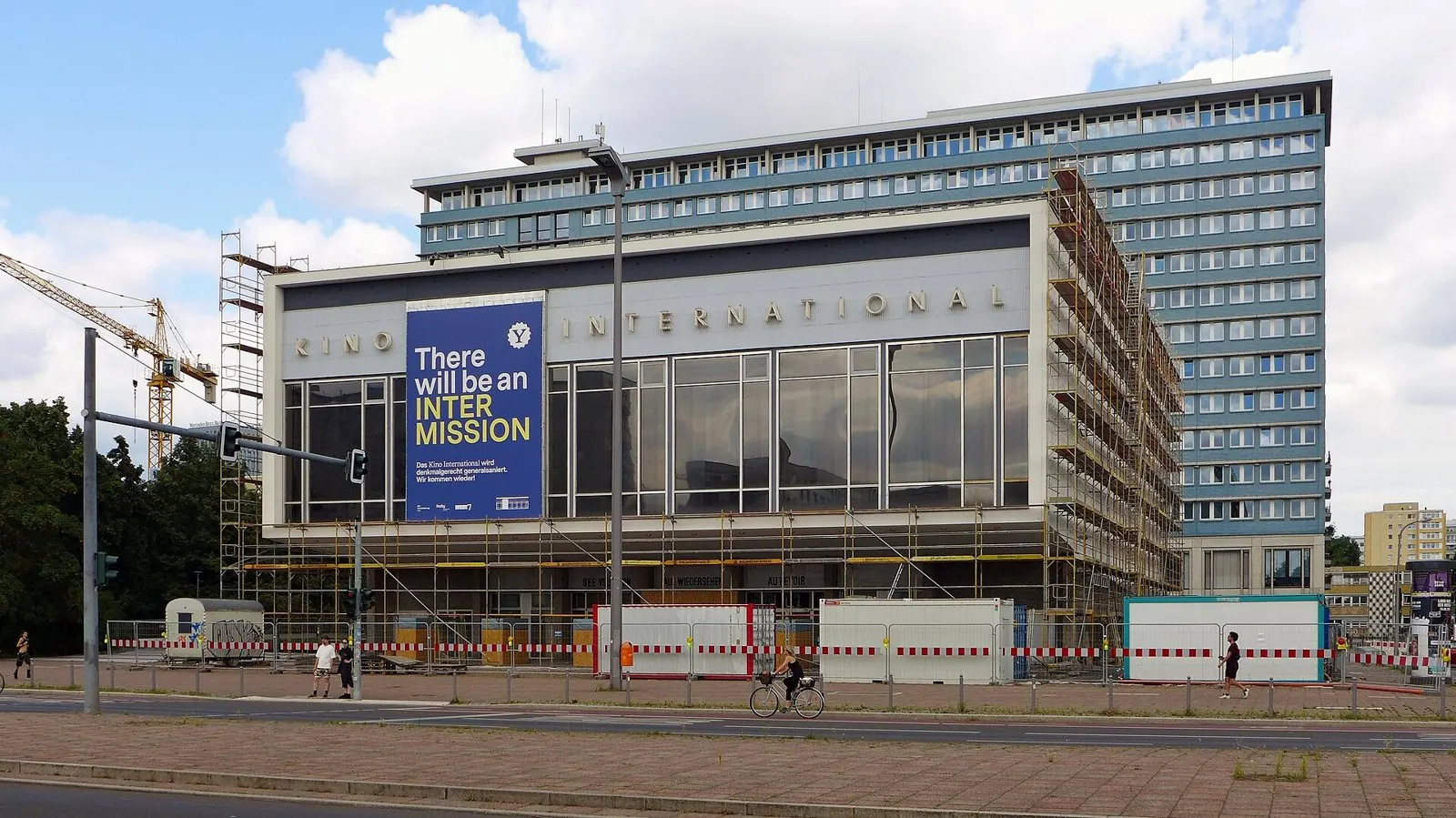
Kino International, Berlin · CC BY-SA 4.0
Cinema · Karl-Marx-Allee
Kino International
A GDR premiere cinema of 1963 on the great socialist boulevard, with a glass-walled lounge bar above the entrance.
Arrive early for a drink in the panorama bar.
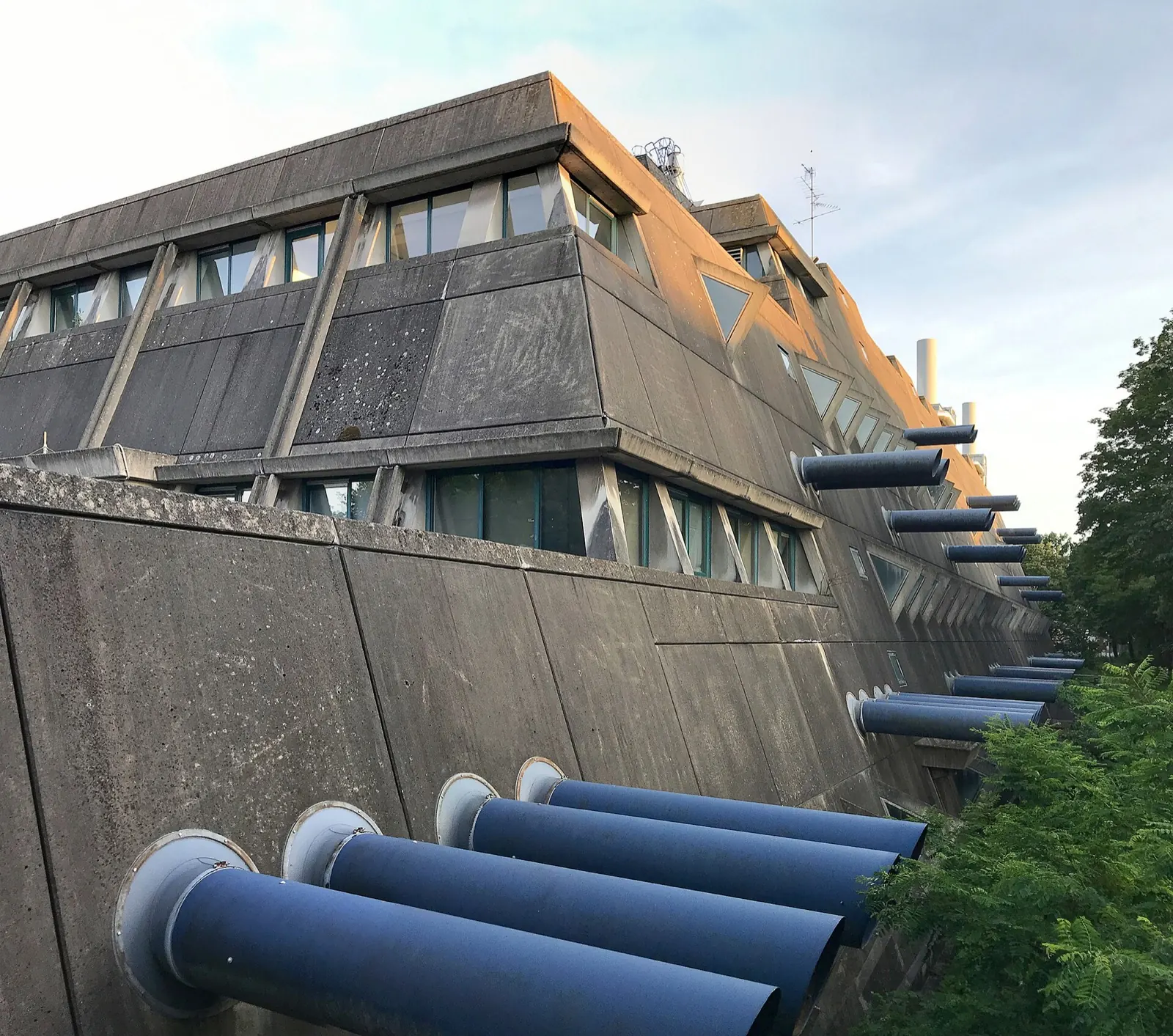
The Mäusebunker, Berlin, 1971–81 · CC BY-SA 4.0
Architecture · Lichterfelde
Mäusebunker
A former animal-research laboratory of 1971–81 that looks like a stranded battleship, with blue pipes sticking out of its concrete flanks. Saved from demolition and protected as a monument, it is now waiting for a new use.
Look from the canal side. Tours happen occasionally.
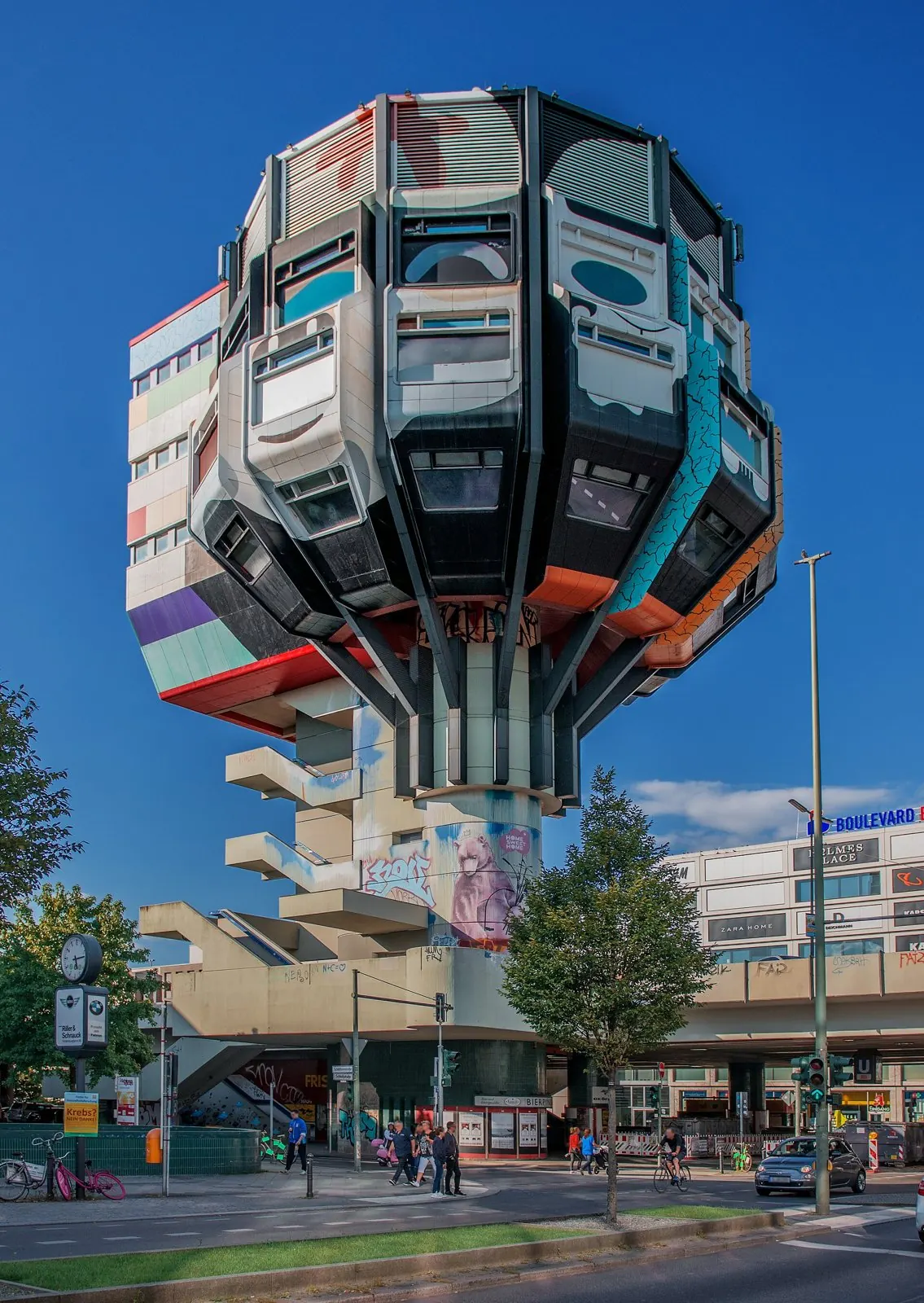
The Bierpinsel, Berlin · CC BY-SA 4.0
Architecture · Steglitz
The Bierpinsel
A 1976 tower restaurant on a concrete trunk over a motorway junction, nicknamed the 'beer brush'. It has been empty for years and painted over by street artists.
Look from the Schloßstraße U-Bahn exit.
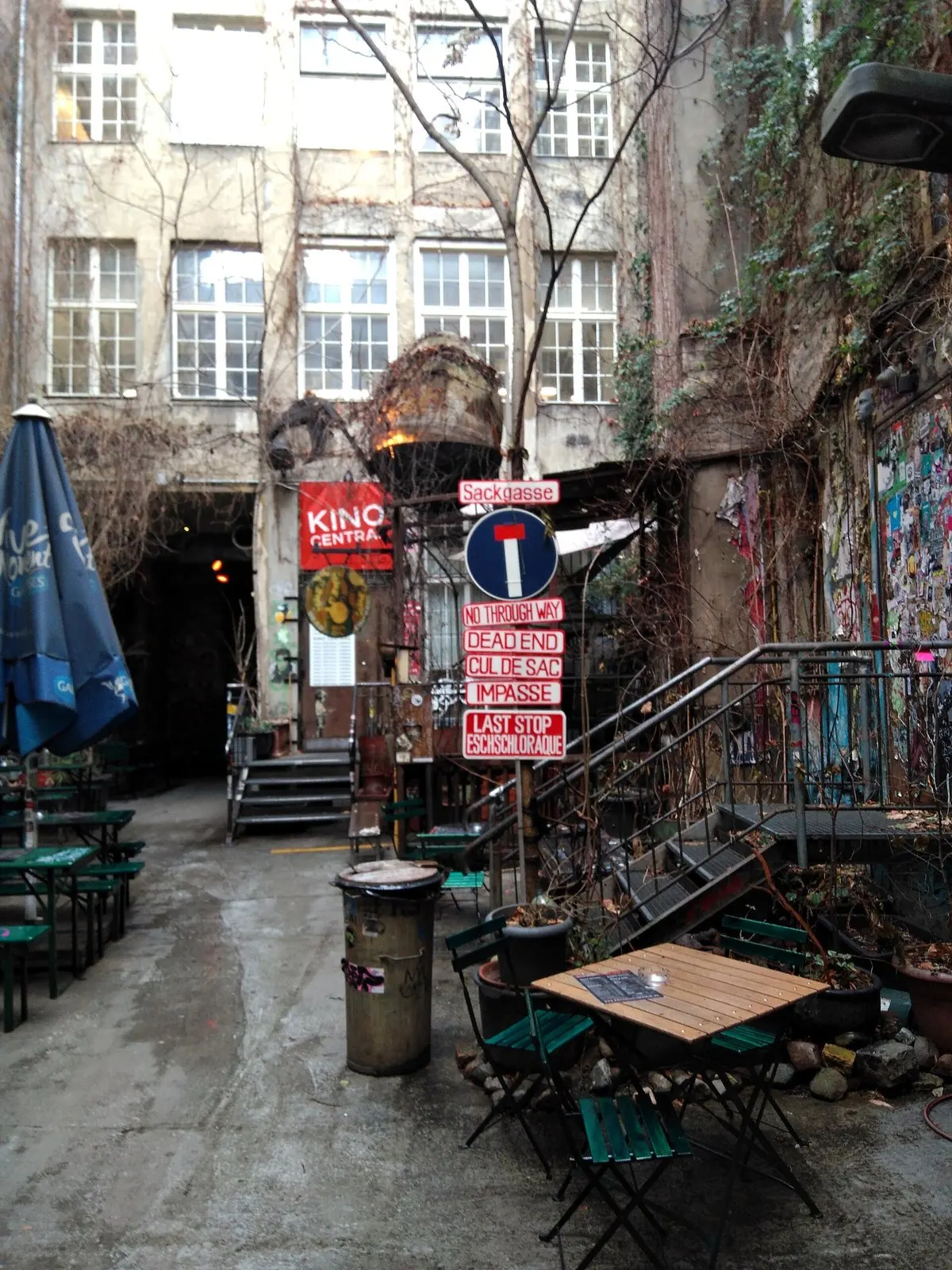
Haus Schwarzenberg, Berlin · CC0
Courtyard · Rosenthaler Straße, Mitte
Haus Schwarzenberg
The last unrenovated courtyard in the Hackesche Höfe, covered in posters and street art. It holds the Otto Weidt workshop museum, where a blind brush-maker hid Jewish workers during the war.
The Otto Weidt museum on the first floor.
Nearby
Potsdam
Sanssouci and the Museum Barberini, 30 minutes by S-Bahn.
Dessau
The Bauhaus building and the Masters' Houses, under two hours by train.
Gemäldegalerie at opening → Neue Nationalgalerie next door → walk past Potsdamer Platz to the Gropius Bau → U-Bahn to Museum Island → Neues Museum and the Alte Nationalgalerie → evening film at Kino International.