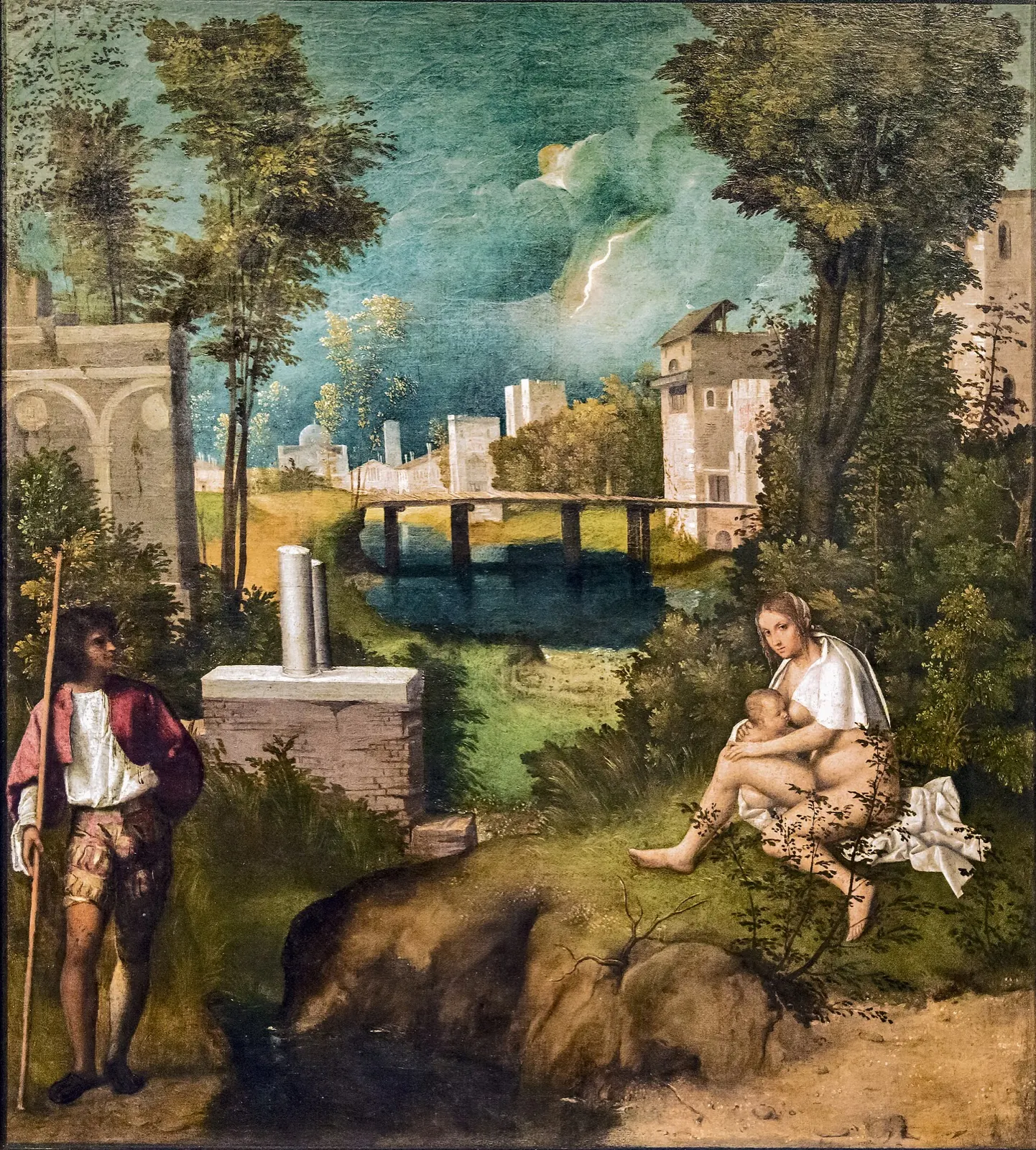
Giorgione, The Tempest, c. 1508. Gallerie dell'Accademia, Venice · Public domain
Museum · Dorsoduro
Gallerie dell'Accademia
Venetian painting from the Byzantine gold grounds to Tiepolo: Bellini, Carpaccio, Titian, Veronese, and Giorgione's The Tempest.
Look for: The Tempest, which nobody has ever convincingly explained.
Book ahead
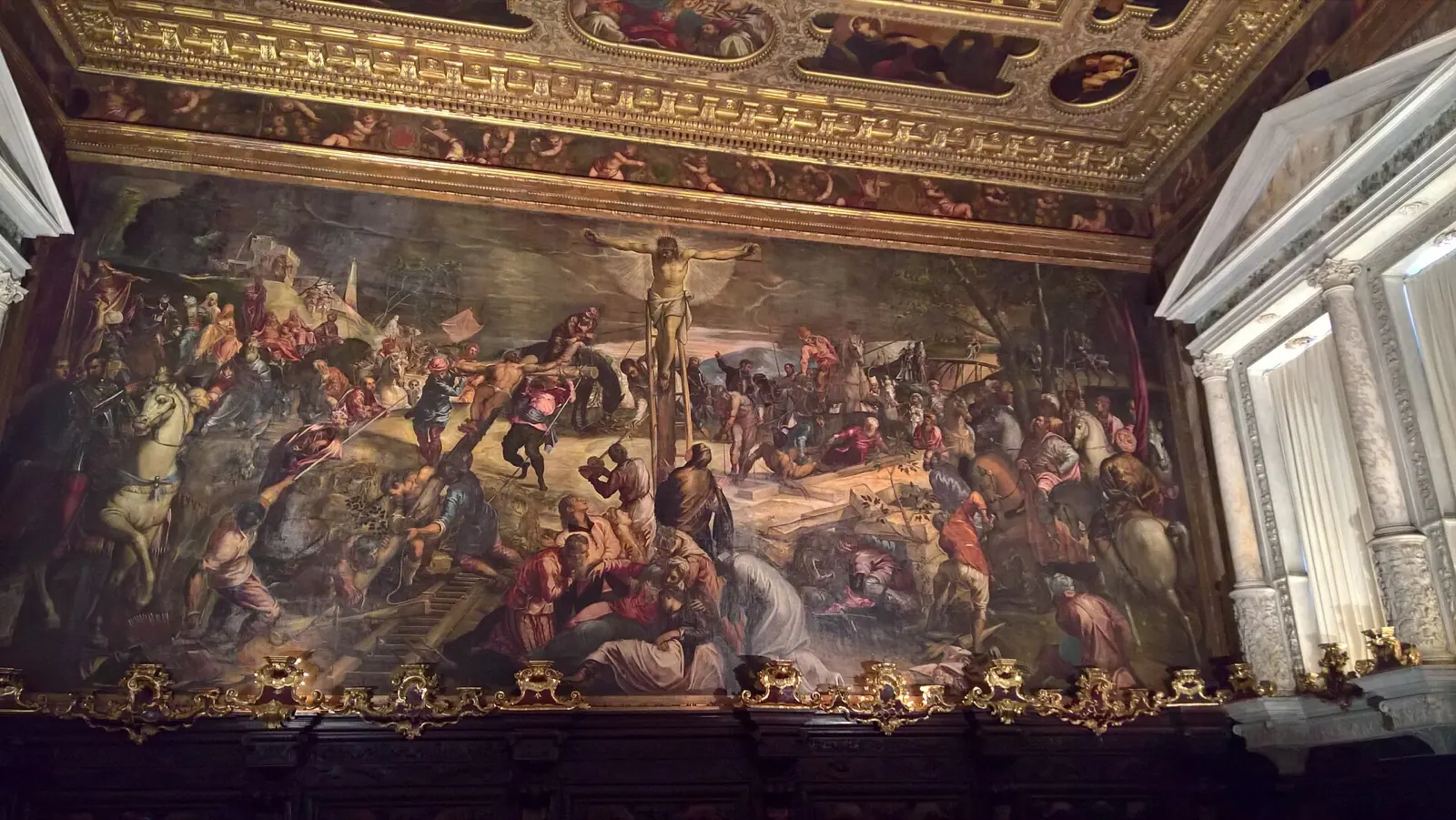
Tintoretto, The Crucifixion, 1565. Scuola Grande di San Rocco, Venice · CC BY-SA 4.0
Confraternity · San Polo
Scuola Grande di San Rocco
Tintoretto spent more than twenty years covering a confraternity's halls with around sixty paintings. It is overwhelming, and that was the point.
Look for: Take one of the mirrors and look at the ceiling in it.
Daily
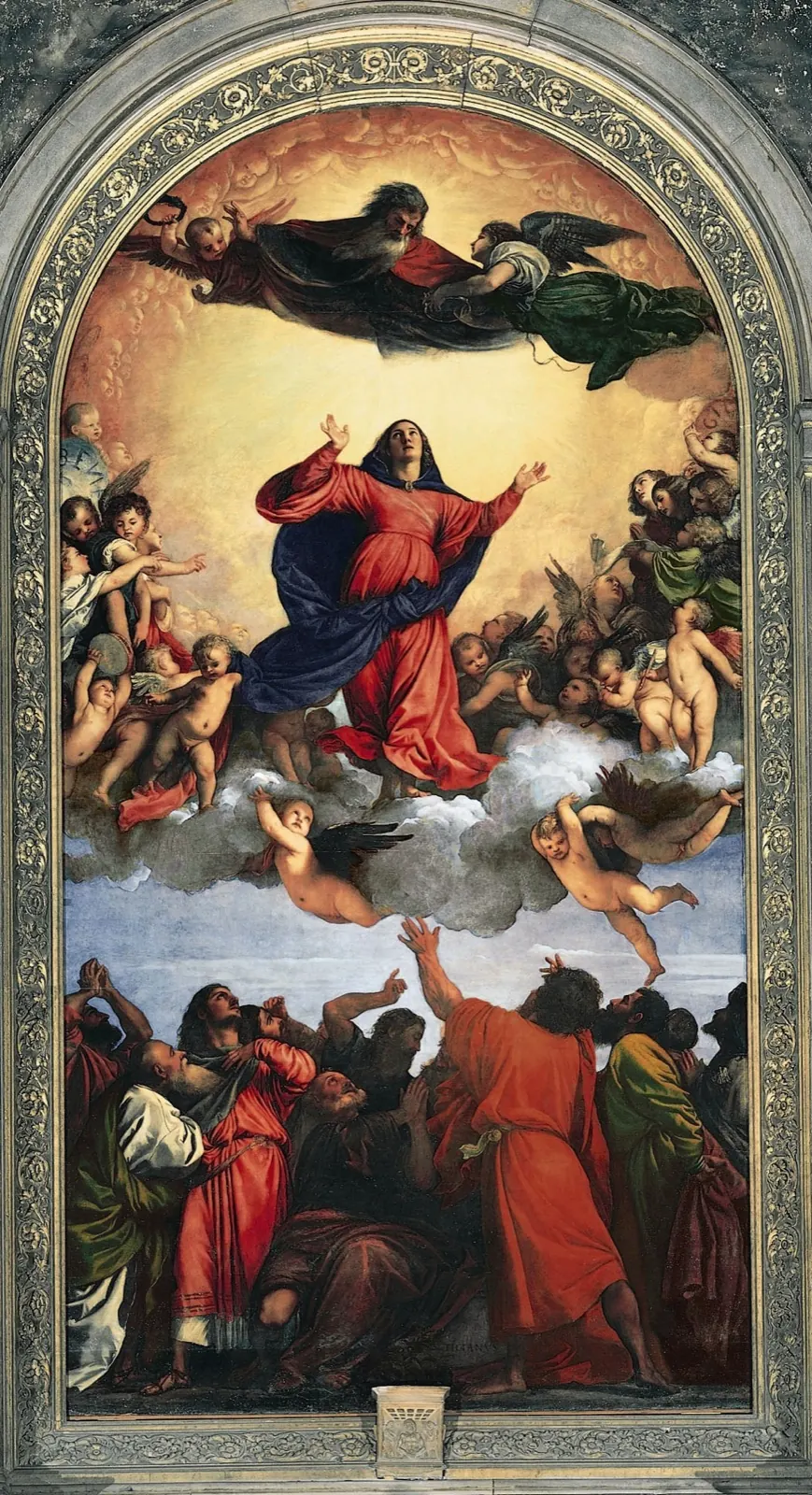
Titian, The Assumption of the Virgin, 1516–18. Basilica dei Frari, Venice · Public domain
Church · San Polo
Basilica dei Frari
A vast Gothic brick church with Titian's Assumption over the high altar, still in the frame he painted it for.
Look for: Titian's tomb and Canova's pyramid tomb, facing each other across the nave.
Small entry fee
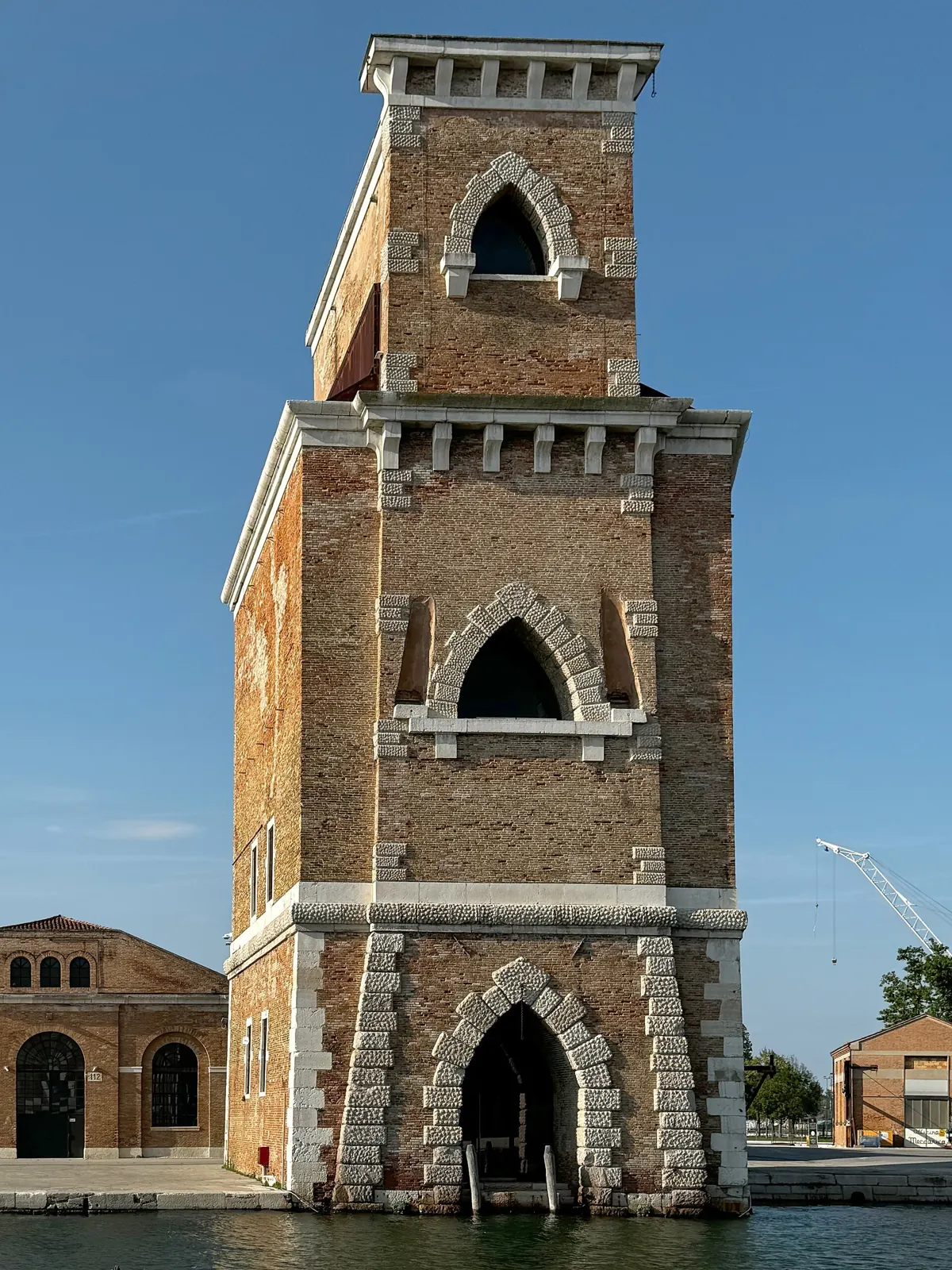
This Photo was taken by Wolfgang Moroder. Feel free to use · CC BY-SA 3.0
Biennale · Castello
The Biennale: Giardini and Arsenale
The national pavilions in the gardens, and the main exhibition in the ropewalks of the old shipyard. In 2026: In Minor Keys, the exhibition conceived by the late Koyo Kouoh.
Look for: The national pavilions outside the Giardini, scattered in palazzi across the city.
Even years · allow two days
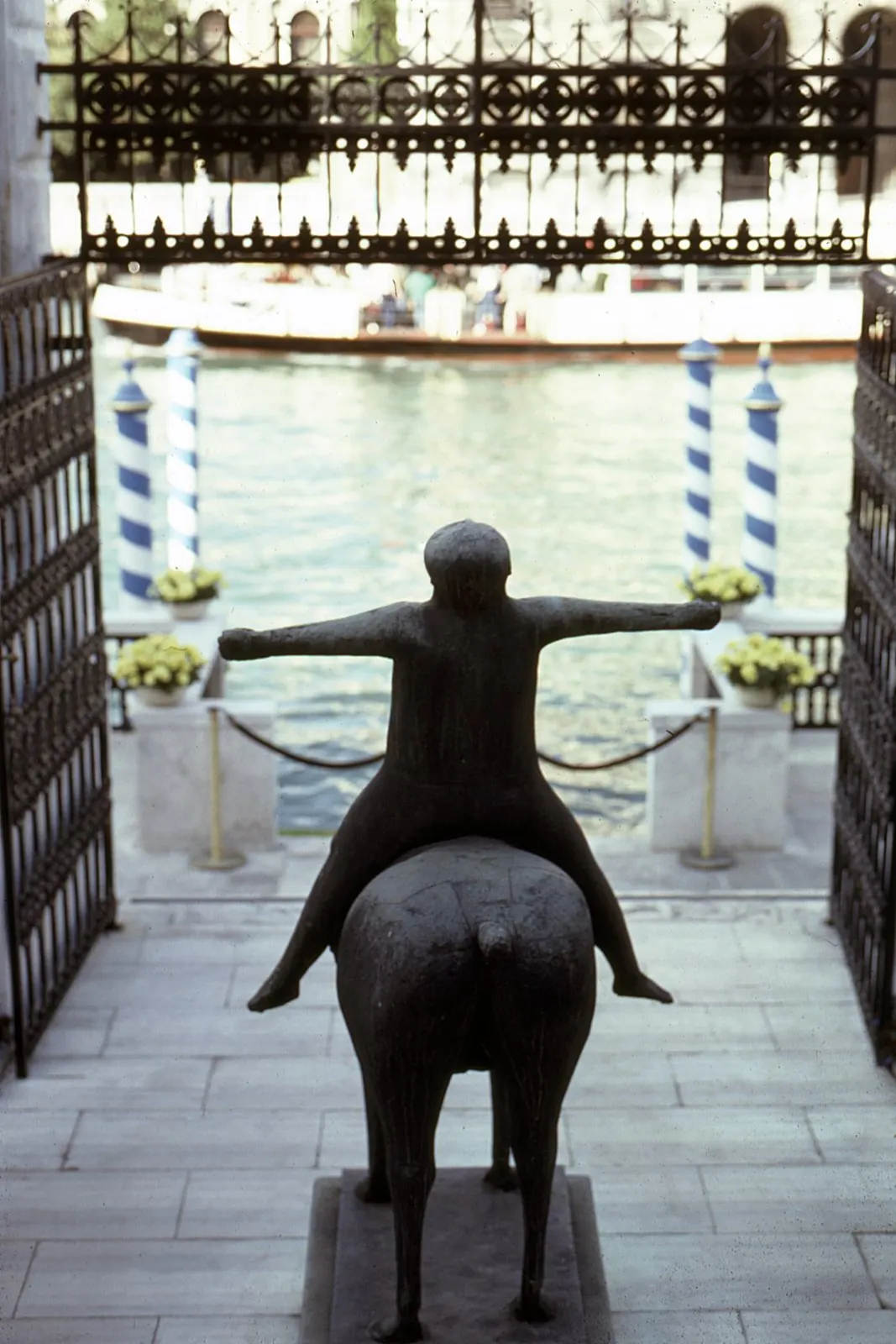
Marino Marini, The Angel of the City, 1948. Peggy Guggenheim Collection, Venice · CC BY 2.0
Museum · Dorsoduro
Peggy Guggenheim Collection
Peggy Guggenheim's unfinished palazzo on the Grand Canal: Pollock, Ernst, Magritte, Brancusi, and her own grave in the garden, beside her dogs.
Look for: Marino Marini's horse and rider on the canal terrace.
Closed Tuesdays
Matteo Pappadopoli · CC BY-SA 4.0
Foundation · Dorsoduro
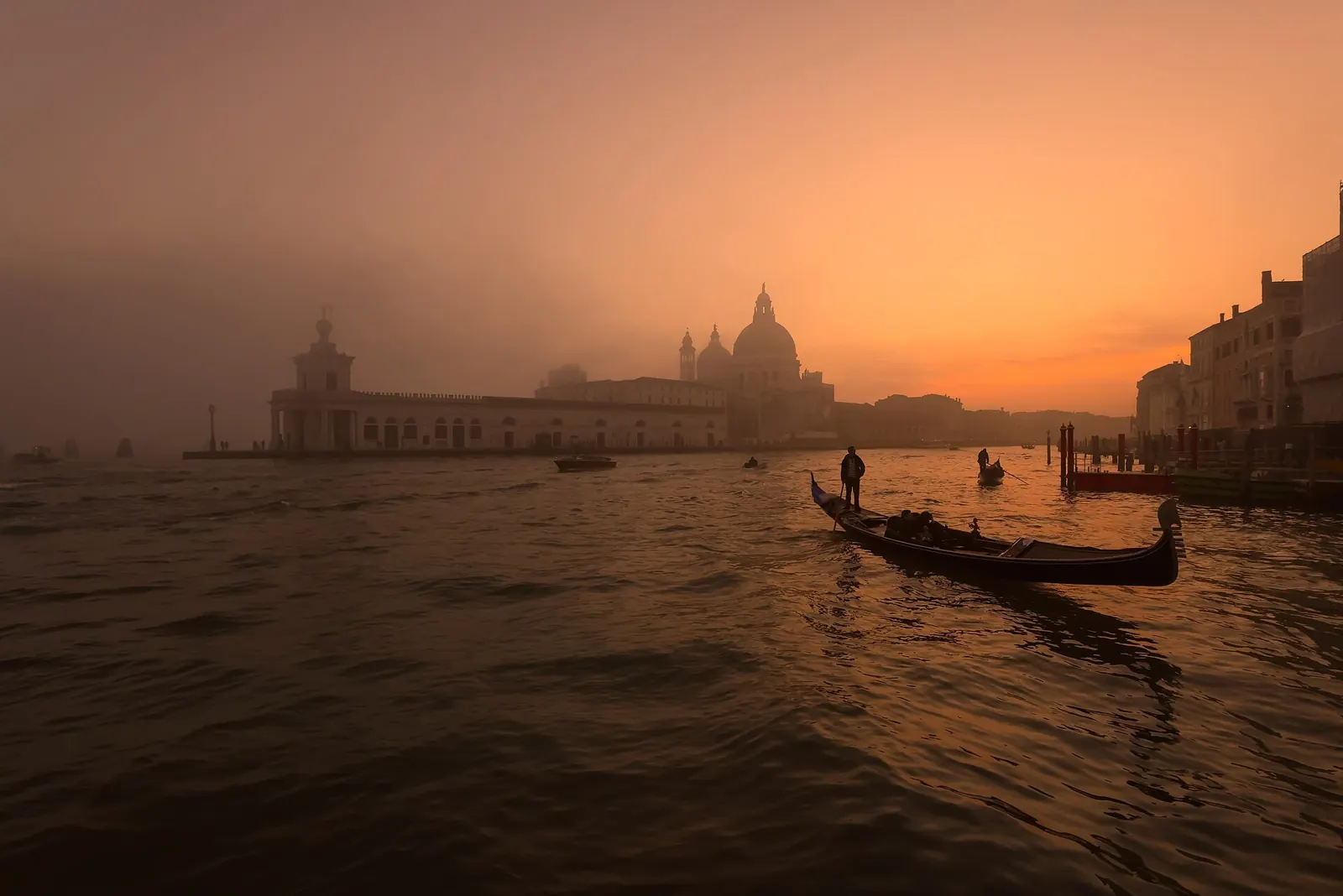
Punta della Dogana
The old customs house at the tip of Dorsoduro, reworked by Tadao Ando for the Pinault Collection's contemporary shows.
Look for: The point outside, where the Grand Canal meets the Giudecca.
Combined ticket with Palazzo Grassi
Didier Descouens · CC BY-SA 4.0
Foundation · San Marco
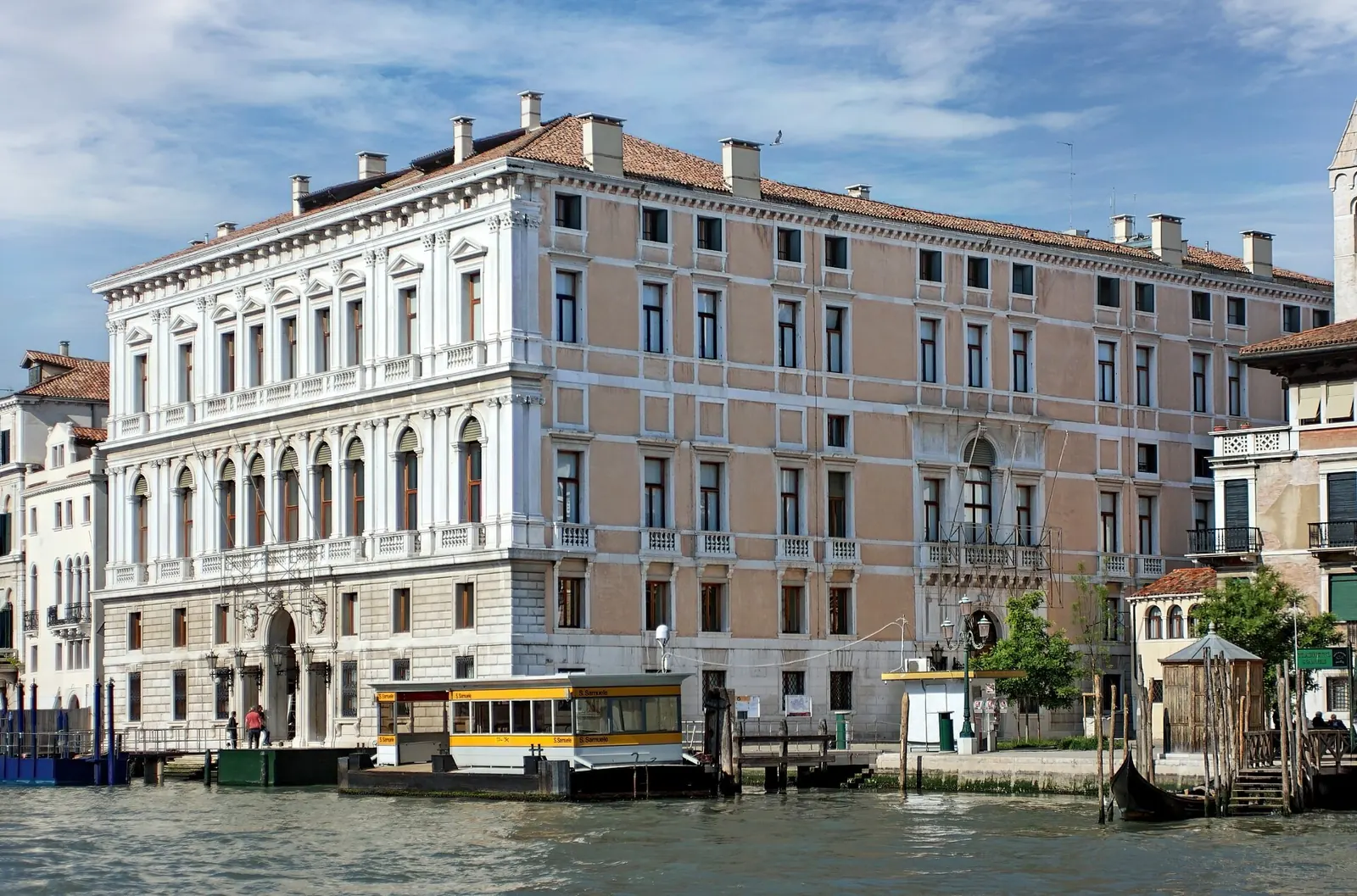
Palazzo Grassi
The Pinault Collection's other Venetian home, an 18th-century palazzo on the Grand Canal used for large monographic shows.
Look for: The atrium, which each artist rebuilds.
Combined ticket with Punta della Dogana
Off the list
Off-Piste in Venice
Rooms, ruins and curiosities: the city's other museum.
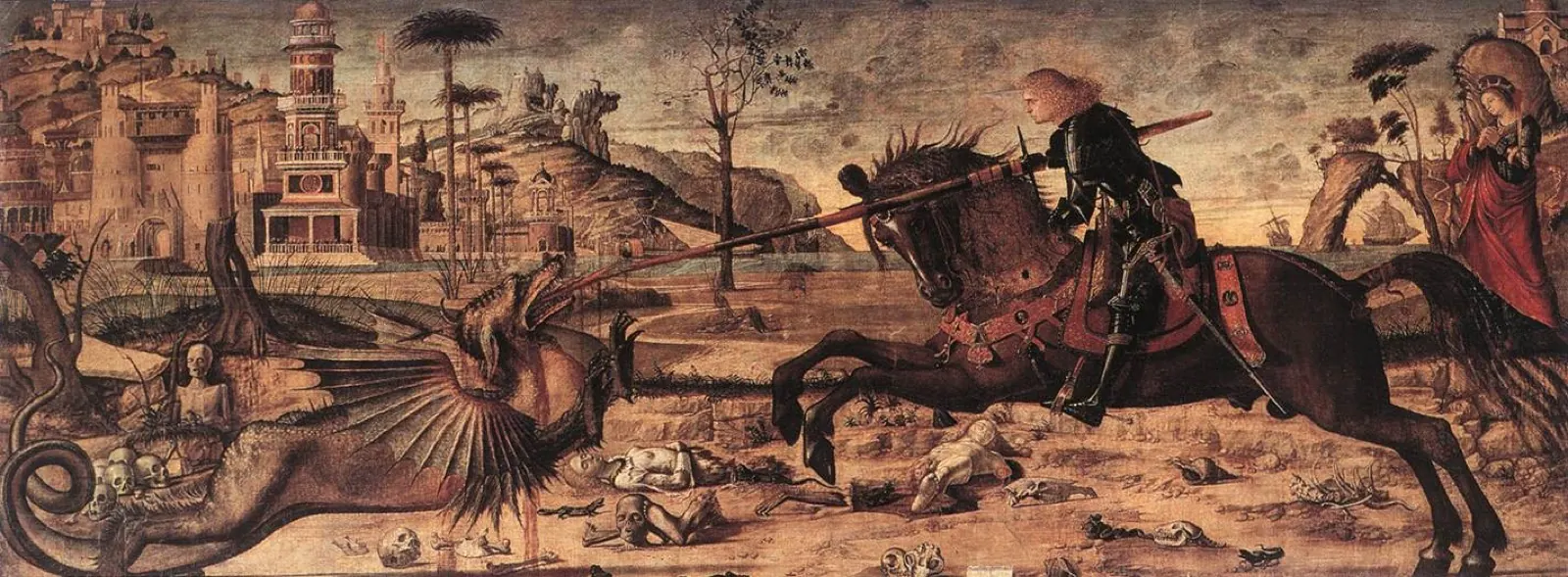
Vittore Carpaccio, Saint George and the Dragon, c. 1502. Scuola di San Giorgio degli Schiavoni, Venice · Public domain
Confraternity · Castello
Scuola di San Giorgio degli Schiavoni
One small room, wood-panelled, with Carpaccio's cycle of saints painted for the Dalmatian community around 1502–07.
Saint Augustine's study, and the little white dog.
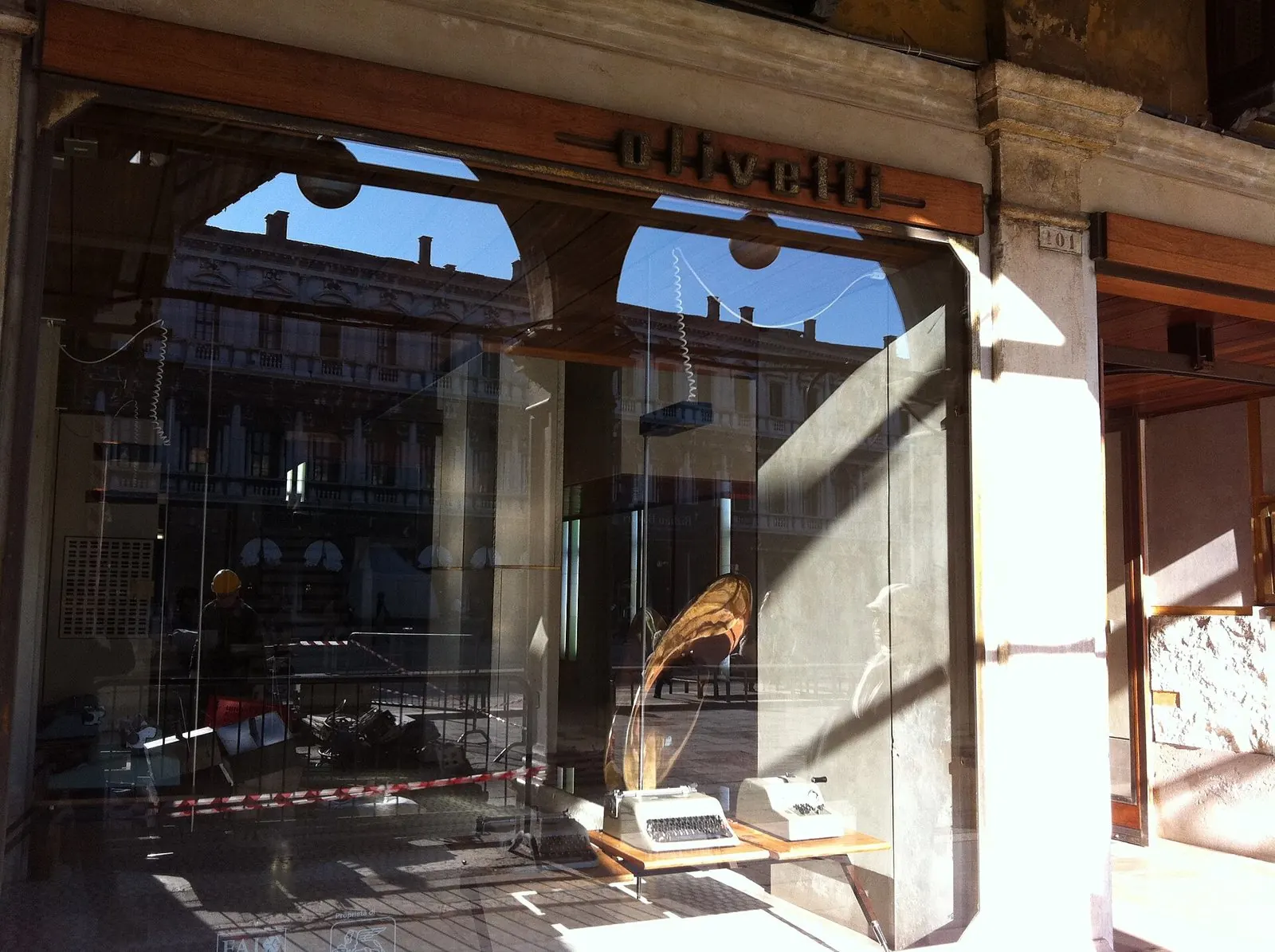
Negozio Olivetti, Venice · CC BY-SA 3.0 it
Architecture · Piazza San Marco
Negozio Olivetti
Carlo Scarpa's 1958 showroom for Olivetti typewriters under the arcades: a staircase of floating marble slabs and a floor of glass tesserae.
The stairs, from the side.
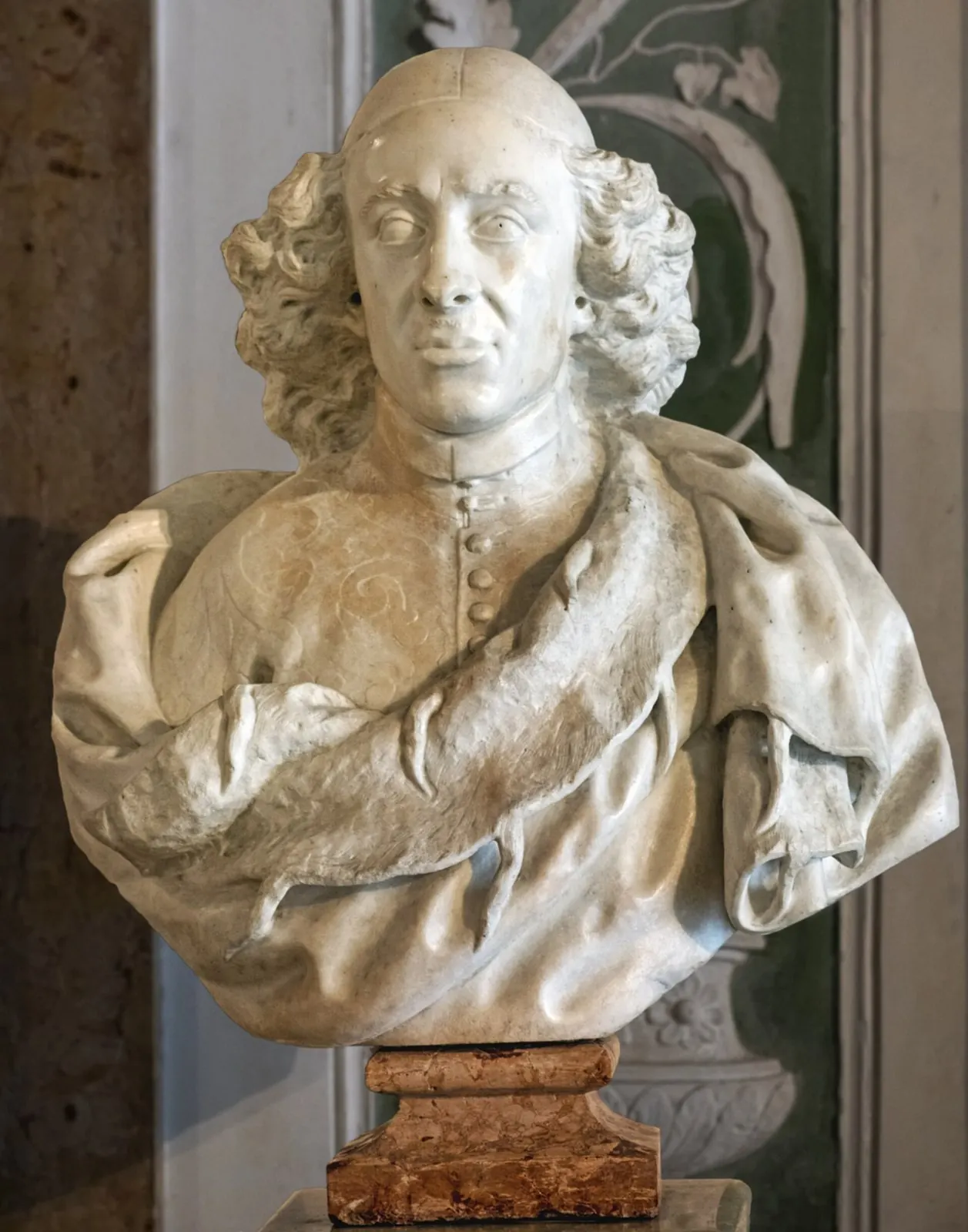
Giacomo Cassetti, Bust of Angelo Maria Querini, 1727–30. Fondazione Querini Stampalia, Venice · CC BY-SA 4.0
Museum · Castello
Fondazione Querini Stampalia
A patrician family's house museum with a ground floor and garden redesigned by Carlo Scarpa, who let the canal in at high tide.
The water garden, then the café.
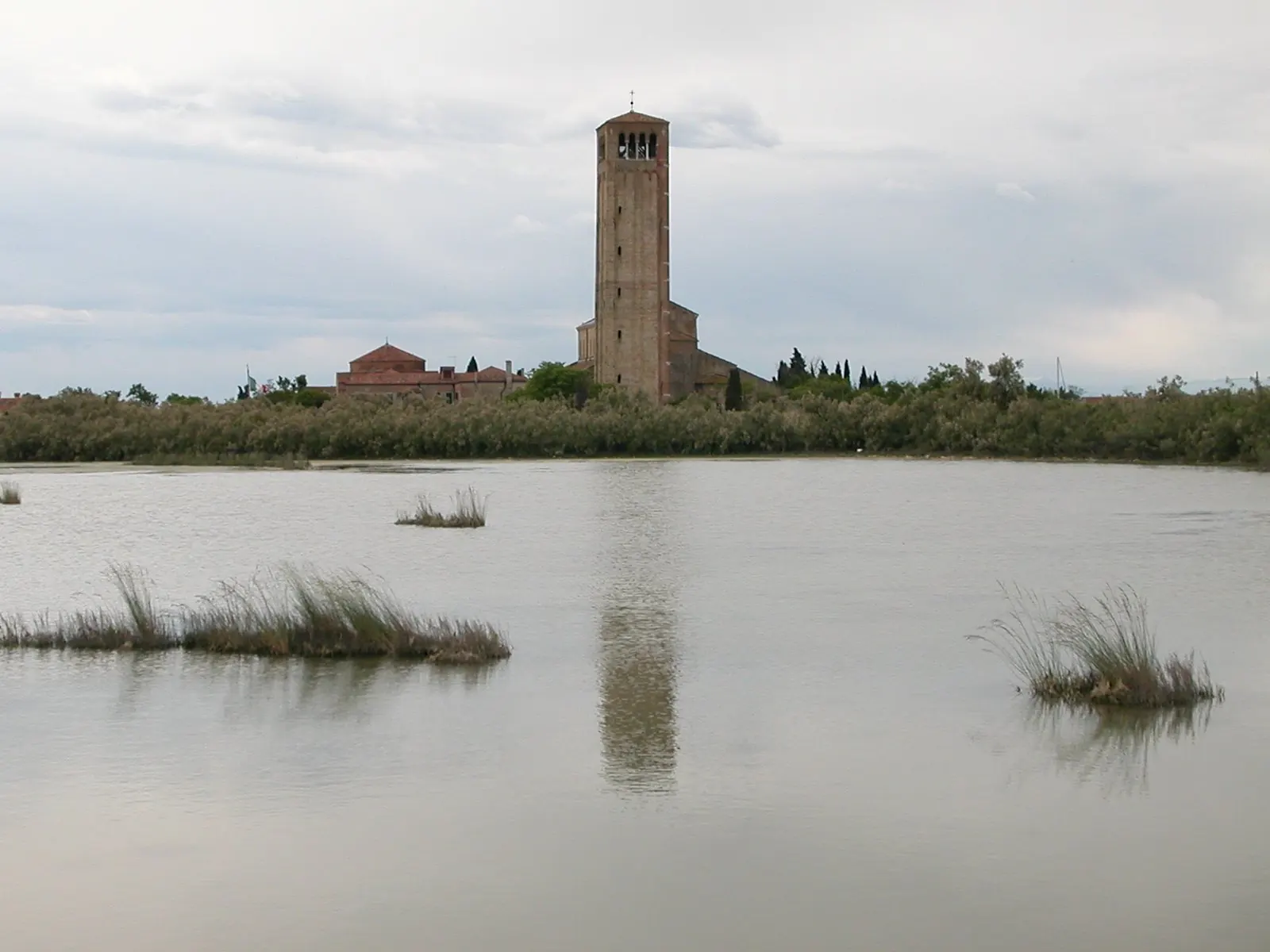
Torcello, Venice · Public domain
Island · Northern lagoon
Torcello
The lagoon's first settlement, almost empty now. The cathedral has an 11th–12th-century Last Judgement mosaic covering its west wall.
Climb the campanile for the view of the marshes.
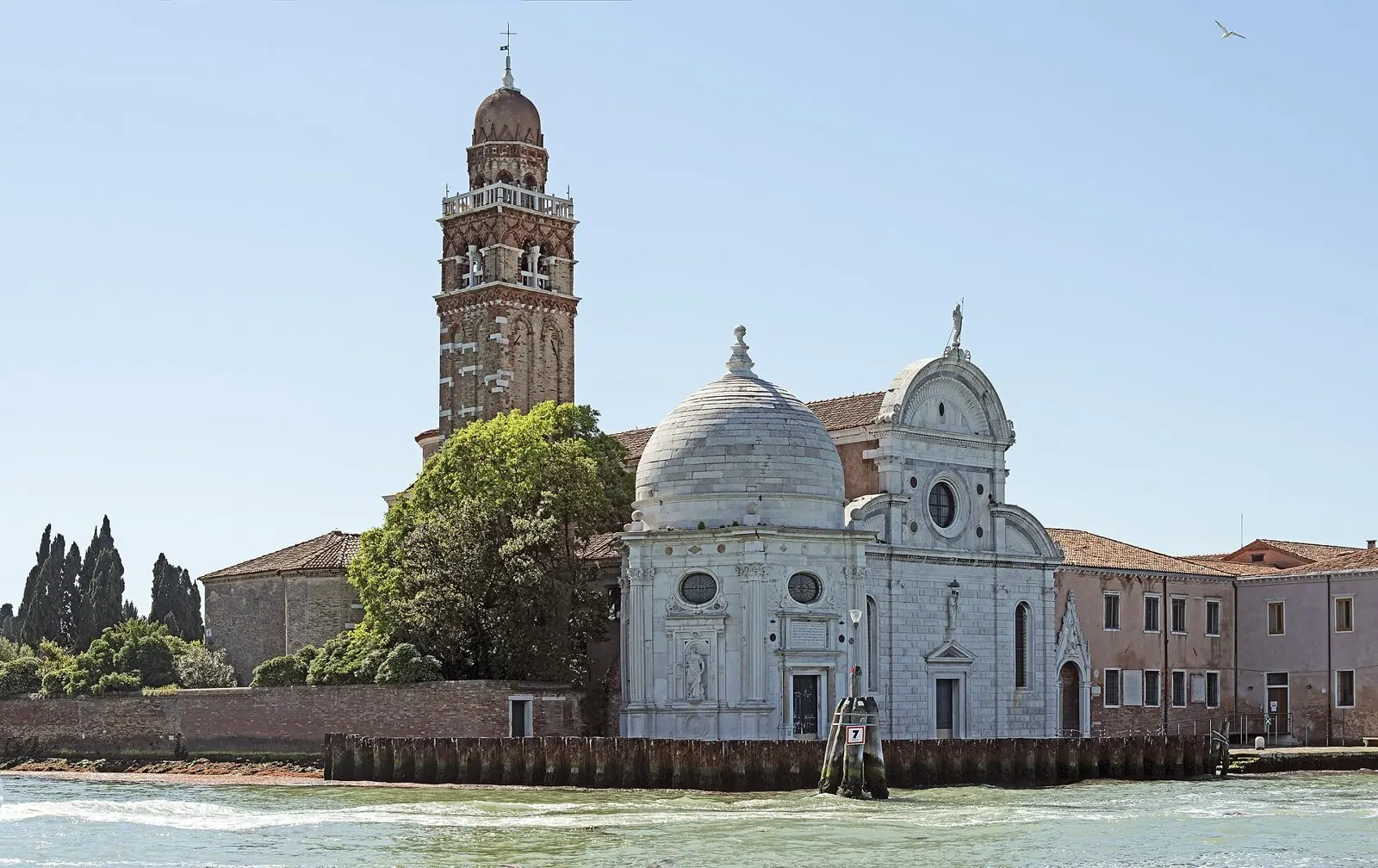
San Michele, Venice · CC BY-SA 4.0
Cemetery · Cemetery island
San Michele
The city's island cemetery, walled in pink brick and cypresses. Stravinsky, Diaghilev and Ezra Pound are buried here.
Diaghilev's grave, where dancers leave ballet shoes.
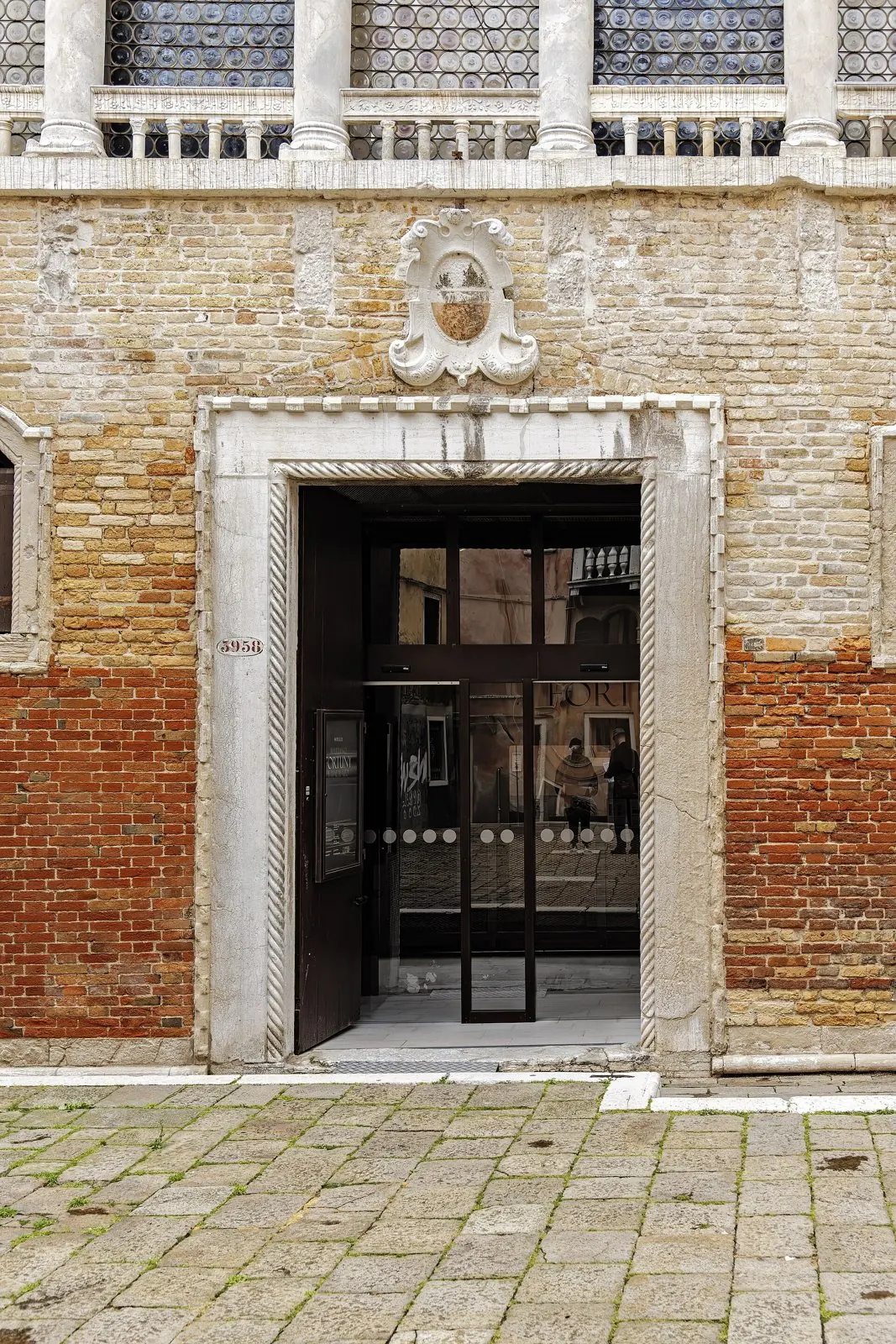
Palazzo Fortuny, Venice · CC BY-SA 4.0
Artist house · San Marco
Palazzo Fortuny
Mariano Fortuny's Gothic palazzo and studio: his lamps, painted fabrics and the heavy velvet atmosphere of a working house.
The first-floor salon, in its half-light.
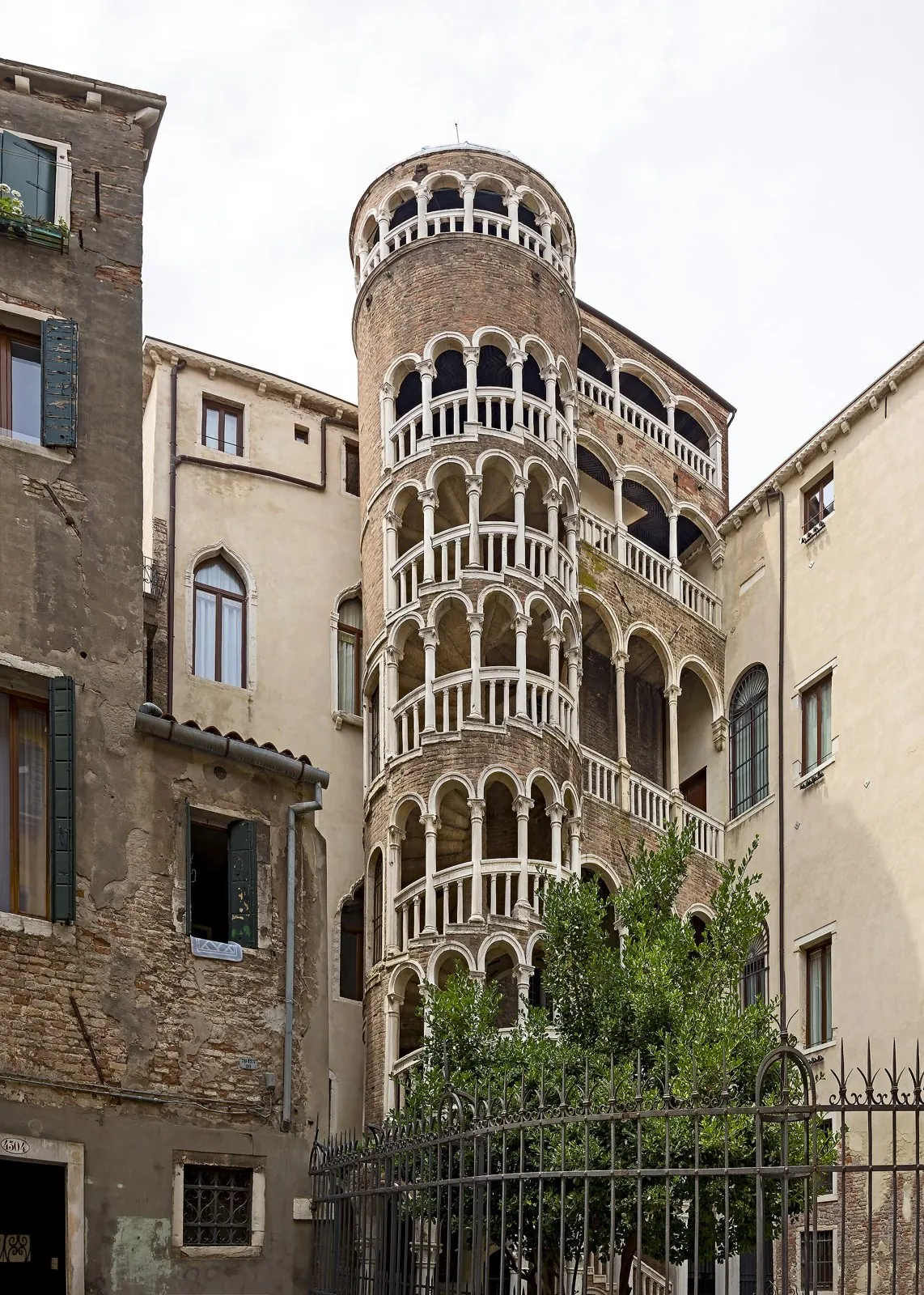
Palazzo Contarini del Bovolo, Venice · CC BY-SA 4.0
Architecture · San Marco
Palazzo Contarini del Bovolo
A late-15th-century spiral staircase, a 'bovolo' or snail in Venetian, wound around the outside of a palazzo tower and hidden in a courtyard.
Climb to the top for the roofs and domes.
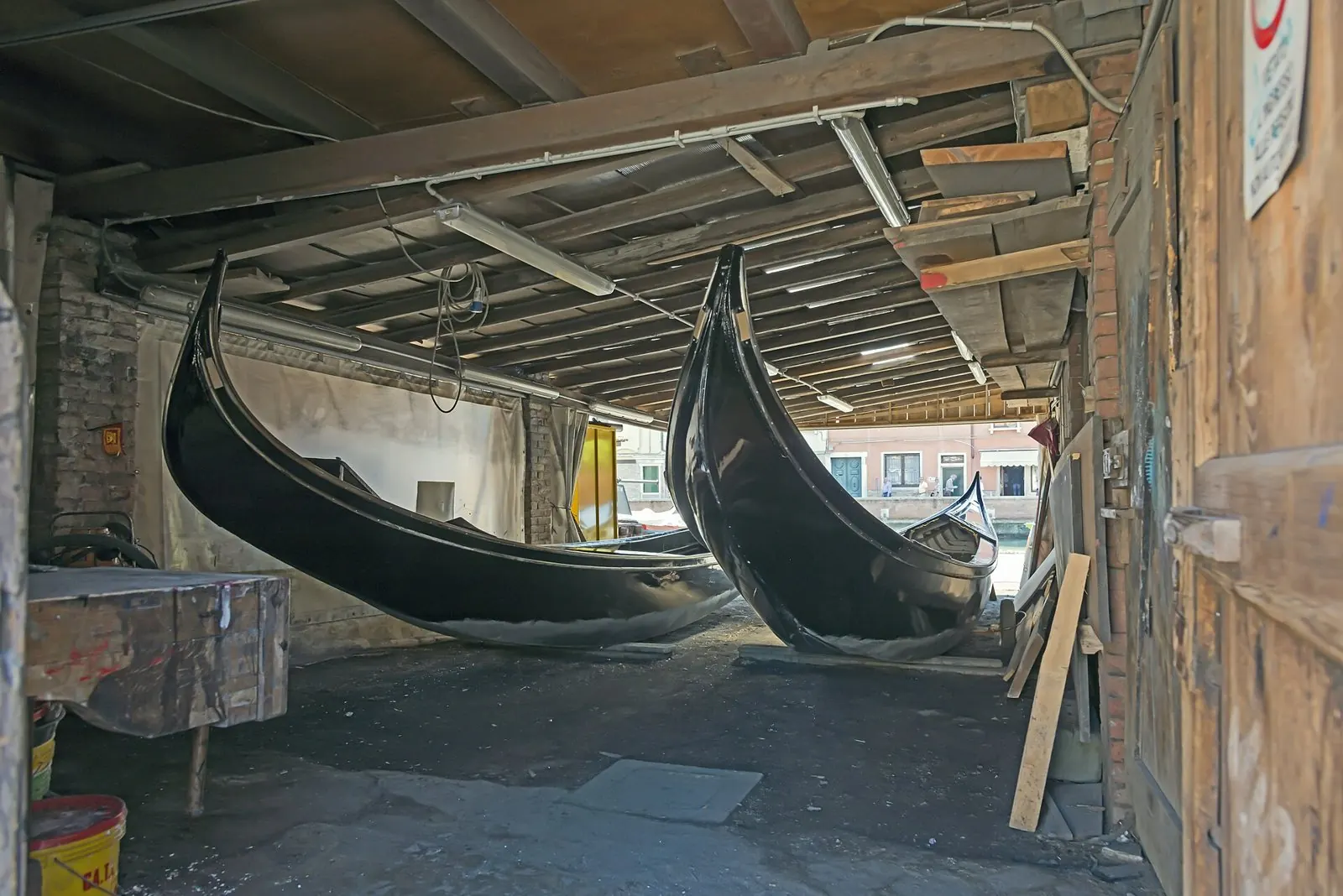
Squero di San Trovaso, Venice · CC BY-SA 4.0
Workshop · Dorsoduro
Squero di San Trovaso
One of the last boatyards where gondolas are still built and repaired, in wooden houses that look as if they came from the Dolomites.
Watch from the opposite bank of the Rio di San Trovaso.
Nearby
Padua
Giotto's Scrovegni Chapel, 30 minutes by train: book a slot.
Possagno
Canova's birthplace and his Gipsoteca, with Carlo Scarpa's extension, about 90 minutes by car.
The Frari at opening → Scuola Grande di San Rocco next door → lunch → the Accademia → the Peggy Guggenheim Collection → walk to Punta della Dogana for the light at the end of the day.